Plant vs Animal Protein for Building Muscle
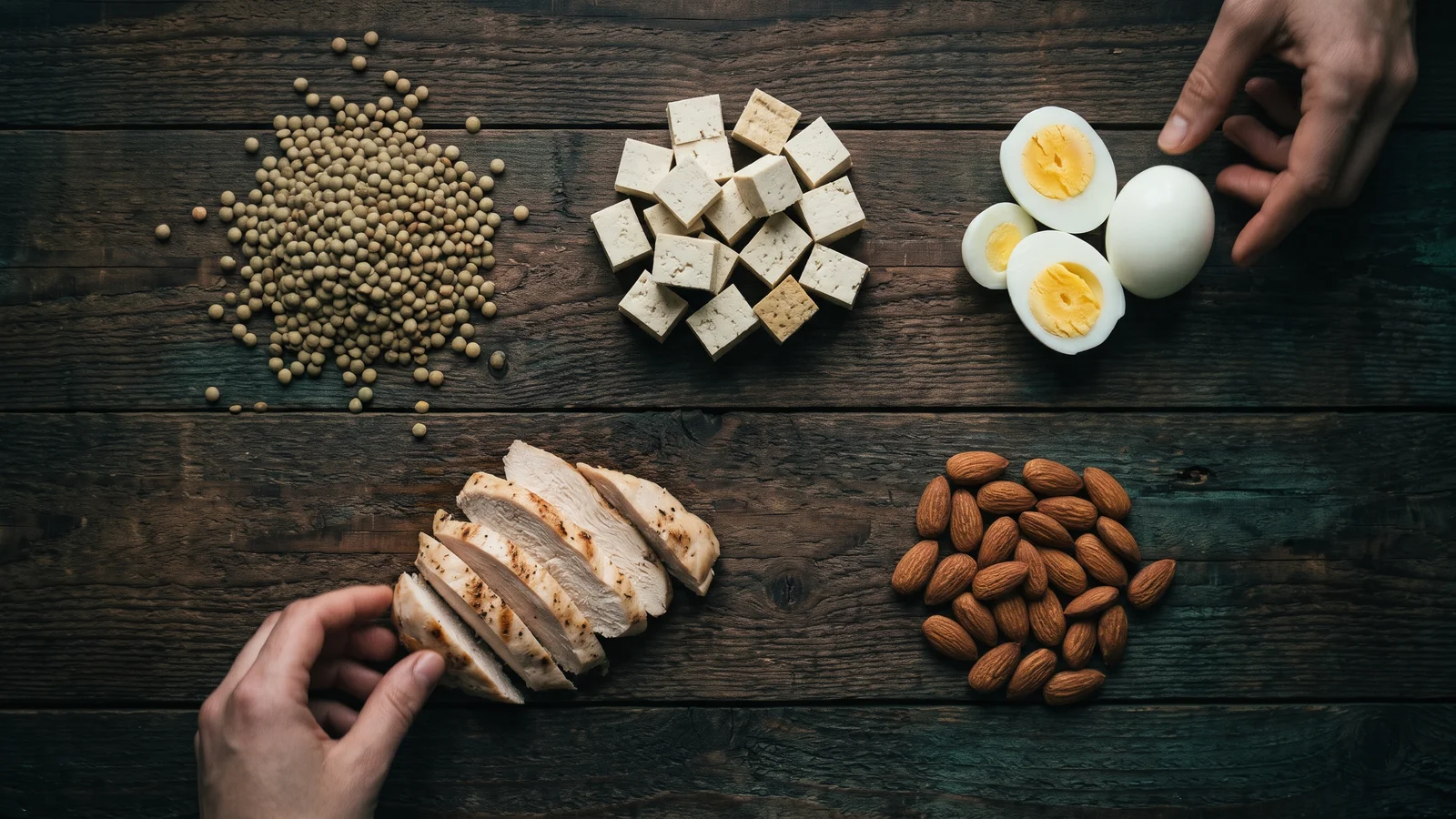
Animal protein may give a small edge for lean mass in younger adults, but when people lift weights and eat enough total protein, plant-based diets build muscle and strength about as well. The evidence comes from several meta-analyses and a controlled 12-week trial of vegans and omnivores.
The question matters because plant-based eating keeps growing, while old advice still calls plant protein inferior. Here is what the best available studies show, where they are limited, and how to build a plan that works whichever way you eat.
Why people think plant protein is weaker
The idea has a real basis. Short laboratory studies often find that animal proteins such as whey stimulate muscle protein synthesis more than plant proteins do. Animal proteins tend to be richer in leucine and digest more completely, while many plant proteins are lower in certain essential amino acids such as lysine or methionine. These differences are real and measurable in the lab, which is why the claim has lasted so long. The question is whether they still matter once real training and ordinary daily eating are involved.
The trouble is that a single meal measured over a few hours is not the same as months of training. Muscle growth depends on repeated sessions, total daily protein, calories, sleep and consistency. A small difference in one acute response does not automatically become a visible difference in muscle after weeks of lifting. Acute studies are useful for generating ideas about mechanisms, but they track a short window after one dose of protein. Whether a small short-term difference adds up over months is exactly what longer randomised trials are designed to test.
That is why longer trials matter. Researchers have pooled randomised studies lasting weeks to years, comparing diets that differ only in protein source. Those pooled results give a more realistic picture of what happens in a gym-going adult, and they are more modest than the laboratory headlines suggest. Pooling matters because individual trials are small, and a single study can easily miss a modest difference or exaggerate one. Combining many of them narrows that uncertainty, although it cannot fix problems in the underlying studies, such as short durations or a narrow range of participants.
What the 2021 meta-analysis found
Lim and colleagues screened 3,081 articles and pooled 16 randomised controlled trials in Nutrients in 2021. Protein source did not change absolute lean mass or muscle strength overall. Animal protein did favour percent lean mass, and the authors concluded that it tends to be somewhat more beneficial for lean mass, especially in younger adults. In other words, the headline result was mixed rather than one-sided: two of the three main outcomes showed no overall difference by protein source, while the third leaned toward animal protein.
In adults under 50, animal protein was linked to a pooled difference of 0.41 kg in absolute lean mass and 0.50 percent in percent lean mass. The confidence interval for the percent figure touched zero, so the result was borderline, and the authors report that resistance training did not change the overall pattern. A difference of 0.41 kg spread over a training programme is small next to the normal variation between individuals, and a borderline interval means the true value could plausibly be close to nothing.
The authors were frank about the limits. Removing any one of four studies made the percent lean mass result non-significant, most animal protein came from dairy and most plant protein from soy, and the clinical importance of such small differences is unclear. Read it as a small possible edge, not a verdict. That means the findings say more about dairy proteins versus soy than about animal and plant foods in general, so they may not apply to beans, lentils, nuts or grains, or to meat and eggs.
Vegans vs omnivores in the gym
A 2021 trial in Sports Medicine by Hevia-Larraín and colleagues tested the question directly. It enrolled 19 habitual vegans and 19 omnivores, all young men, who completed 12 weeks of supervised resistance training twice a week. Protein was set at 1.6 grams per kilogram of body weight per day in both groups. Matching protein this closely is what makes the comparison informative, because any difference in results could not simply be blamed on one group eating less protein. Training was supervised, which helps ensure both groups actually completed the sessions.
To keep protein matched, the vegan group used soy protein and the omnivore group used whey. Both groups improved significantly, and leg lean mass rose by 1.2 kg in each. Leg press strength rose by 97 kg in the vegan group and 117 kg in the omnivore group, and the authors found no significant difference between groups. The omnivore group's larger numerical rise in leg press strength can look like an advantage, but it was not statistically significant, so it cannot be read as evidence that animal protein works better.
The design has limits worth knowing. Participants were untrained young men, and supplements were used to equalise protein, so the result does not describe every vegan diet or older adults. It does show that an entirely plant-based diet with enough protein can support gains in a well-run programme. Because protein was deliberately set to a target in both groups, the findings also say little about people who follow a plant-based diet casually and happen to eat less protein. The lesson is about total protein and training, not about dietary labels.
Soy, the best-studied plant option
Soy has the most research behind it. Messina and colleagues pooled nine studies with 266 participants in the International Journal of Sport Nutrition and Exercise Metabolism in 2018. Five compared whey with soy, and four compared soy with other proteins such as beef or milk protein. Because the pooled studies included both whey and other animal proteins as comparators, the analysis tests soy against several of the most common animal protein options rather than a single product. That breadth makes the finding more useful than a single head-to-head trial would be.
Strength and lean body mass rose during resistance training in every group, and the authors found no difference between soy and animal protein for bench press, squat or lean mass. They concluded that soy supplementation produces similar gains to whey in people who train with resistance. The consistent rise in every group, including those taking soy, is the key point: the training itself drove the improvements, and the choice of protein supplement did not change how much people gained. That is the same message the vegan and omnivore trial gave, from a different set of studies.
This does not mean every plant protein behaves like soy. Pea, rice and blended powders are studied less, and amino acid profiles differ. If you rely on plant protein, combining sources across the day and choosing a little more total protein is a sensible, low-risk way to cover the gaps. Because soy is the best-studied option, it is the safest plant protein to treat as proven, while other plant proteins remain plausible but less tested. Variety also helps because different plant foods complement each other's amino acids.
Total protein and training matter more
Morton and colleagues pooled 49 trials with 1,863 participants in the British Journal of Sports Medicine in 2018. Protein supplementation during resistance training added a small amount of fat-free mass, about 0.30 kg on average, and the benefit shrank with age and grew with training experience. A gain of about 0.30 kg is modest, which is itself informative: even adding supplemental protein to training produced only a small average benefit. The benefit also differed by age and training experience, so the average figure hides real variation between lifters.
Their analysis also suggested that total intakes above about 1.62 grams per kilogram per day produced no further gains in fat-free mass. This is an estimate from pooled data rather than a hard cutoff, and individual needs vary, but it gives lifters a realistic target to aim for. Note that the figure refers to total daily intake from all sources, not to the amount in a supplement. A lifter who already eats at or near that level through ordinary meals would not be expected to gain much extra from adding more protein on top.
For a plant-based eater, the practical message is to reach that range with whole foods and, if needed, a soy or blended powder. Lifting hard, progressing the load, eating enough calories and sleeping well will do far more for muscle than switching between a burger and a bowl of lentils. If you are older or eating only plants, it is reasonable to aim toward the upper end of the range and to keep checking that your protein is spread across the day.
Build muscle on any protein source
- check_circleAim for the range — target roughly 1.6 g of protein per kg of body weight daily, adjusting with a dietitian if you have health conditions.
- check_circleSpread it out — include a protein-rich food at each meal rather than saving it for dinner.
- check_circleMix plant sources — combine soy, legumes, grains, nuts and seeds so amino acids complement each other.
- check_circleConsider soy or a blend — a soy-based or blended powder is the best-studied way to top up plant protein.
- check_circleAdd a little margin — if you eat only plants and are older than 50, aim at the upper end of your range.
- check_circleTrain progressively — add load or reps over time, because the training signal drives the growth.
- check_circlePlan micronutrients — vegans should check vitamin B12, iron and omega-3 intake with a professional.
"Protein source may give a small edge in some analyses, but in trained or training adults with enough total protein, the gap is small and often disappears."
— Summary of Lim 2021, Hevia-Larraín 2021 and Messina 2018
Frequently Asked Questions
Can you build muscle on a vegan diet?
Yes. In a 12-week trial of 19 vegans and 19 omnivores eating 1.6 grams of protein per kilogram daily, both groups gained leg lean mass and strength with no significant difference between them. Results come from young men, so older adults may need more attention to total protein.
Is whey better than soy for muscle growth?
In acute studies whey often looks stronger, but a 2018 meta-analysis of nine longer trials with 266 participants found similar strength and lean mass gains from soy and animal protein during resistance training. The evidence suggests the difference is small in practice.
How much protein do I need to build muscle?
A 2018 meta-analysis of 49 trials found no further fat-free mass gains above about 1.62 grams per kilogram per day on average. Individual needs differ with age, training and health, so treat it as a starting point and ask a professional if unsure.
Do older adults need more protein if they eat plants?
Older adults respond less to protein on average, and the 2018 analysis found the benefit shrank with age. Plant-based older adults may therefore want to choose higher-protein foods and discuss their targets with a doctor or dietitian.
Sources
- Animal Protein versus Plant Protein in Supporting Lean Mass and Muscle Strength: A Systematic Review and Meta-Analysis of Randomized Controlled Trials — Nutrients, 2021
- High-Protein Plant-Based Diet Versus a Protein-Matched Omnivorous Diet to Support Resistance Training Adaptations: A Comparison Between Habitual Vegans and Omnivores — Sports Medicine, 2021
- No Difference Between the Effects of Supplementing With Soy Protein Versus Animal Protein on Gains in Muscle Mass and Strength in Response to Resistance Exercise — International Journal of Sport Nutrition and Exercise Metabolism, 2018
- A systematic review, meta-analysis and meta-regression of the effect of protein supplementation on resistance training-induced gains in muscle mass and strength in healthy adults — British Journal of Sports Medicine, 2018
Educational information, not medical advice. See our Medical Disclaimer and Editorial Policy for how we research and verify articles.