Creatine: The Complete Evidence-Based Guide
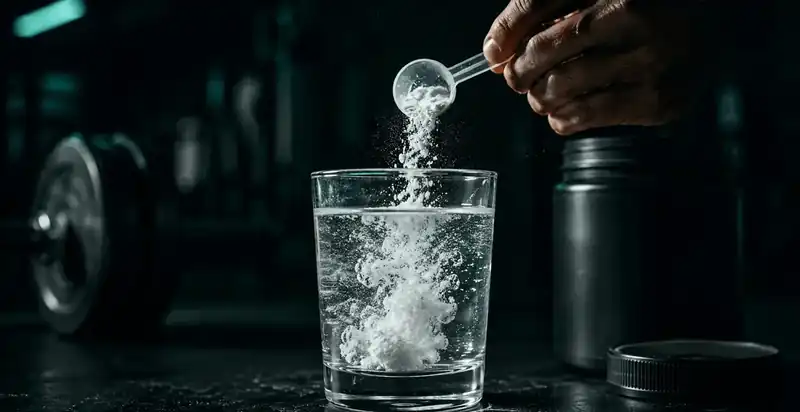
Creatine is the most researched sports supplement in history — more peer-reviewed studies than protein powder, caffeine, and beta-alanine combined. Over five decades of controlled trials have examined it from every angle: strength, hypertrophy, cognition, hydration, safety, and beyond. The conclusion is unambiguous. If you lift weights, do explosive sports, or simply want to perform better and recover faster, creatine monohydrate should be in your stack. This guide cuts through the noise and tells you exactly how it works, how to take it, and what all those myths actually mean.
What Is Creatine? The Biochemistry in Plain English
Creatine is a naturally occurring compound synthesised in your liver and kidneys from the amino acids arginine, glycine, and methionine. Your muscles store it primarily as phosphocreatine — roughly 95% of your body's total creatine sits in skeletal muscle, with the remaining 5% distributed in the brain, heart, and testes.
You obtain creatine from two sources: endogenous synthesis (about 1g per day) and dietary intake. Red meat and fish are the richest food sources — a 450g steak contains approximately 2g of creatine. Vegans and vegetarians, who consume little to none from diet, typically have 10–20% lower muscle creatine stores than omnivores, which is why they tend to respond most dramatically to supplementation.
How Creatine Works: The ATP-PCr System
Every muscular contraction is powered by adenosine triphosphate (ATP). The problem: your muscles only store enough ATP for approximately 1–3 seconds of maximal effort. To sustain explosive work beyond that, your body needs to regenerate ATP rapidly — and this is exactly where phosphocreatine steps in.
Phosphocreatine donates its phosphate group to ADP (depleted ATP) to regenerate ATP almost instantaneously. This phosphocreatine-ATP cycle powers maximal-intensity efforts for 6–12 seconds — the duration of a heavy squat set, a 100m sprint, or a maximal jump. When you supplement with creatine, you increase the size of this phosphocreatine reservoir, allowing more ATP to be resynthesised during each explosive effort and reducing the time needed to replenish it between sets.
The net effects are directly measurable: more total reps per set, shorter recovery between efforts, greater peak power output, and over time — more training volume, which drives greater muscle hypertrophy.
"Creatine monohydrate is the most effective ergogenic nutritional supplement currently available to athletes in terms of increasing high-intensity exercise capacity and lean body mass during training."
— International Society of Sports Nutrition Position Stand (Kreider et al., 2017)
What the Evidence Actually Shows
A 2003 meta-analysis published in the Journal of Strength and Conditioning Research pooled 22 studies and found creatine supplementation produced an average 8% increase in one-repetition maximum strength and a 14% increase in peak power output compared to placebo. These are not marginal gains — they represent the difference between years of consistent training.
For lean mass, a comprehensive 2003 meta-analysis (Branch, International Journal of Sport Nutrition and Exercise Metabolism) found mean lean mass gains of 1.37 kg greater than placebo over training periods averaging 28 days. The mechanism is dual: increased training volume directly drives hypertrophy, and creatine may also increase myofibrillar protein synthesis independently by promoting cellular hydration and IGF-1 signalling.
Cognitive benefits are increasingly documented too. Creatine supplementation has been shown to improve working memory and processing speed, particularly in sleep-deprived individuals and vegetarians who start with lower brain creatine stores. A 2022 meta-analysis in Nutrients confirmed significant cognitive improvements across tasks requiring short-duration, high-intensity mental effort.
Creatine and Body Composition: What About Fat Loss?
Creatine does not directly burn fat. Its mechanism is anabolic and performance-enhancing, not lipolytic. However, the body composition improvements it produces are real and follow two pathways:
-
trending_up
More muscle = higher resting metabolic rate Each kilogram of additional muscle tissue burns approximately 13 kcal per day at rest. Creatine-augmented training accelerates muscle accrual, improving the body's long-term fat-burning baseline.
-
bolt
More training volume = greater total calorie expenditure Creatine allows you to perform more reps and sets before fatigue, increasing training density and the total energy cost of each session.
The initial scale increase of 1–2 kg during the first week of loading is intracellular water, not fat or bloat. Phosphocreatine is osmotically active — it draws water into muscle fibres, increasing cell volume. This is actually beneficial for protein synthesis and does not affect subcutaneous water or make you look softer.
Types of Creatine: Why Monohydrate Wins Every Time
The supplement industry has introduced dozens of creatine variants: creatine ethyl ester, buffered creatine (Kre-Alkalyn), creatine HCl, creatine nitrate, and magnesium creatine chelate. Each claims superior absorption, fewer side effects, or greater efficacy. The independent evidence does not support these claims.
Creatine Form Comparison
| Form | Evidence | Cost | Verdict |
|---|---|---|---|
| Monohydrate | Extensive (500+ RCTs) | Low | Gold standard |
| Creatine HCl | Very limited | High | No proven advantage |
| Kre-Alkalyn | Limited, industry-funded | High | No proven advantage |
| Creatine Ethyl Ester | Studies show inferior | High | Worse than monohydrate |
| Creatine Nitrate | Very limited | High | No proven advantage |
Creatine monohydrate has the most evidence, is independently verified, and costs a fraction of the alternatives. Micronised creatine monohydrate (smaller particle size) dissolves more easily in water but produces identical physiological effects. Buy the cheapest third-party-tested monohydrate you can find.
Loading vs No-Loading: What the Research Says
Muscle creatine saturation is the goal. Two protocols achieve it:
-
flash_on
Loading protocol (fast saturation) 20g per day, split into 4 × 5g doses, for 5–7 days. Muscles reach ~95% saturation within 7 days. Best if you have a competition or specific training block starting soon.
-
show_chart
Maintenance-only protocol (slow saturation) 3–5g per day from day 1. Muscles reach the same saturation as loading — it just takes 28 days instead of 7. Causes less initial GI discomfort and zero differences in long-term outcomes.
Once saturated, a 3–5g daily maintenance dose is sufficient to preserve maximum creatine stores. Excess creatine is simply excreted as creatinine — the kidneys are extremely efficient at this in healthy individuals.
Dial In Your Total Calorie Intake First
Creatine amplifies your training stimulus. To build muscle, you still need a slight calorie surplus and adequate protein. Use our Calorie Calculator to find your precise TDEE before deciding your surplus.
Open Calorie Calculator calculateFOR MUSCLE
Timing: Does It Actually Matter?
Timing is the least important variable — consistency matters far more. That said, a 2013 study in the Journal of the International Society of Sports Nutrition (Antonio & Ciccone) found a small but statistically significant benefit from post-workout creatine supplementation over pre-workout supplementation, attributed to enhanced muscle creatine uptake when blood flow to muscle is high.
The practical recommendation: take creatine with your post-workout meal on training days, or at any consistent time on rest days. Co-ingesting creatine with carbohydrates and protein increases muscle creatine uptake — taking it with your recovery meal is therefore optimal.
On rest days, timing is completely irrelevant. The goal is simply maintaining saturation. Take it with a meal to avoid the mild GI discomfort some people experience on an empty stomach.
Who Benefits Most?
The following populations see the largest responses to creatine supplementation:
-
eco
Vegans and vegetarians Starting with lower baseline muscle creatine, they experience 10–20% greater increases in muscle creatine content and correspondingly larger strength and performance gains compared to omnivores.
-
female
Women Women naturally store 70–80% of the creatine that men do relative to lean mass. Supplementation closes this gap — producing strength and lean mass gains equivalent to or exceeding those seen in men. Women also have additional evidence for mood stabilisation and cognitive benefits, particularly peri-menopause.
-
elderly
Adults over 50 Sarcopenia (age-related muscle loss) accelerates after 50. Creatine combined with resistance training consistently outperforms training alone in this demographic for both strength and muscle preservation. Cognitive benefits are particularly well-documented in older adults.
-
sports
Strength and power athletes The primary population studied. Benefits are most pronounced in sports requiring repeated maximal efforts with short recovery periods: weightlifting, sprinting, rugby, football, combat sports, HYROX, and CrossFit.
Five Myths, Debunked by Evidence
"Creatine damages your kidneys"
This myth originates from creatine increasing serum creatinine — a kidney filtration marker — which naturally rises when creatine metabolism increases. However, multiple long-term safety studies (up to 5 years of continuous use) have found no adverse effect on kidney function in healthy individuals. The only caveat: those with pre-existing renal disease should consult a physician. Healthy kidneys are not at risk.
"Creatine causes hair loss"
This comes from a single 2009 study (van der Merwe et al.) showing elevated DHT in rugby players loading creatine. DHT is implicated in male pattern baldness. However, the study was small (n=20), DHT stayed within normal physiological range, and no subsequent study has replicated the finding or documented actual hair loss. The evidence base for this claim is essentially one outlier study. If you are genetically predisposed to male pattern baldness and extremely concerned, note the evidence is far too weak to draw conclusions.
"You need to cycle creatine"
No evidence supports cycling. Your body does not down-regulate its creatine transporters in a way that reduces long-term efficacy. Cycling on and off simply means spending weeks at sub-maximal creatine stores for no benefit. Take it continuously.
"Creatine makes you look bloated"
The 1–2 kg of water weight gained during loading is intracellular — inside the muscle cells, not subcutaneous. This actually increases the appearance of muscle fullness. It is not the same as the puffy, soft look caused by excess sodium or poor sleep. In practice, most people's physique improves on creatine, not worsens.
"Creatine is a steroid"
Creatine has no structural or mechanistic relationship to anabolic steroids. It does not affect hormone levels, is not banned by any sporting body, and is classified as a dietary supplement worldwide. It is synthesised naturally in the human body and obtained from food. Calling it a steroid is like calling magnesium a drug.
Your Practical Protocol
-
looks_one
Choose creatine monohydrate Micronised for solubility if preferred, but standard monohydrate works identically. Verify third-party testing (Informed Sport, NSF, or Labdoor). Ignore every other form.
-
looks_two
Decide on loading or no-loading Loading: 20g/day (4 × 5g) for 5–7 days, then 3–5g maintenance. No-loading: 3–5g from day 1, full saturation in ~28 days. Both reach the same endpoint.
-
looks_3
Take it with food Post-workout meal on training days for maximum uptake. Any meal on rest days. Include carbohydrates and protein in the same sitting to maximise muscle transport.
-
looks_4
Stay hydrated Creatine draws water into muscle cells. Your total body water need increases slightly during loading. Aim for an additional 500ml of water per day during the loading phase. Use our Water Calculator to set your baseline.
-
looks_5
Take it indefinitely There is no reason to stop. Long-term safety data is strong. The moment you stop, muscle creatine stores deplete over 4–6 weeks and you lose the ergogenic benefit.
Set Your Protein Target to Match Your Training
Creatine and protein work synergistically — creatine drives training volume, protein provides the substrate for repair. For muscle gain, target 1.6–2.2g of protein per kg of bodyweight. Use our Macro Calculator to find your optimal split.
Macro Calculator arrow_forwardThe Bottom Line
Creatine monohydrate is the single most well-supported performance supplement available without a prescription. The mechanism is understood, the safety data is robust over decades, the benefits are consistent across demographics, and the cost is negligible. The only question is why you aren't taking it yet.
Five grams a day. With food. Indefinitely. That's the entire protocol.