Protein Per Meal: How Much Can You Actually Absorb?
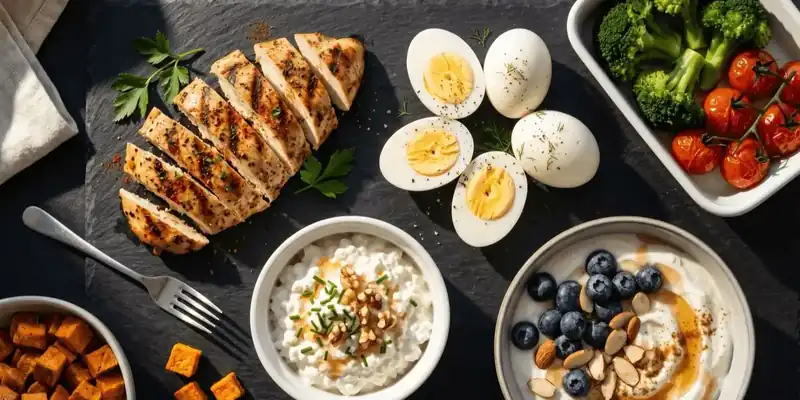
"You can only absorb 30 grams of protein per meal." If you have spent any time in fitness communities, you have heard this claim — often delivered with great confidence, usually by someone selling protein powder in the very next breath. The 30g rule is one of the most persistent myths in sports nutrition. The body does not work that way. But dismantling the myth does not mean protein timing and distribution are irrelevant. They matter — just for different, more nuanced reasons than most sources describe.
Where the 30g Myth Came From
The origin of the "30g limit" is a misinterpretation of early muscle protein synthesis (MPS) research. Studies from the 1990s and 2000s showed that MPS peaked at around 20–40g of protein after a training session and did not increase further with larger doses in the acute measurement window. Commentators extrapolated this to mean the body cannot absorb more than 30–40g at once and the excess is wasted. This is factually wrong on two counts.
First, the body absorbs virtually all dietary protein. Absorption in the intestinal sense — amino acids moving from the gut into the bloodstream — has no ceiling. What those studies were actually measuring was the rate of muscle protein synthesis, not absorption. Second, a landmark 2023 study by Trommelen et al. directly tested this by infusing participants with 100g of protein in a single dose and measuring whole-body utilisation over a 12-hour period. The conclusion: the body used essentially all of it, just over a longer time course than a smaller dose would. Larger protein meals simply stay in the gut longer, releasing amino acids gradually. Nothing is wasted.
The Leucine Threshold: The Real Story
If the myth is wrong, what does matter at the meal level? The leucine threshold. Leucine is the branched-chain amino acid (BCAA) that acts as the primary trigger for mTORC1 activation — the cellular signalling pathway that initiates muscle protein synthesis. Research consistently identifies that approximately 2.5–3g of leucine per meal is required to maximally stimulate this pathway. Below that threshold, the MPS response is submaximal regardless of total protein content.
For high-quality animal proteins (chicken, eggs, fish, dairy), you reach the leucine threshold at roughly 25–35g of total protein, because leucine typically constitutes 8–10% of the amino acid profile. Plant proteins generally have lower leucine density — soy protein reaches the threshold at a similar dose, but wheat protein or rice protein requires 40–50g or supplemental leucine to achieve the same stimulus. This is the practical reason why total protein quality matters, not the fictional "30g limit."
"The concept that there is a rigid cap on protein absorption per meal is not supported by the evidence. Distribution matters for optimising MPS frequency, not because excess protein is excreted."
— Trommelen et al. (2023), Cell Reports Medicine
Why Distribution Still Matters
Even though all ingested protein is eventually used, distribution across meals affects how frequently muscle protein synthesis is stimulated throughout the day. MPS is a transient process — it peaks roughly 1–3 hours after a protein-containing meal and then returns to baseline, even if amino acids are still present in the bloodstream (a phenomenon called the muscle full effect). Eating all your protein in one or two large meals means fewer MPS stimulation events per day compared to spreading it across 3–5 meals.
Research from the Trommelen group and others suggests 4 meals per day, each containing 0.4g of protein per kilogram of bodyweight, is close to optimal for maximising cumulative MPS. For a 75kg athlete targeting 1.6g/kg total daily protein, that means approximately 30g per meal across 4 meals — which happens to coincide with the old myth, but for entirely different reasons.
Practical Distribution Guide
| Body Weight | Daily Target (1.6g/kg) | Per Meal (4 meals) | Example Source |
|---|---|---|---|
| 60 kg | 96g | 24g | 150g chicken breast |
| 75 kg | 120g | 30g | 200g salmon fillet |
| 90 kg | 144g | 36g | 5 large eggs + 200g Greek yoghurt |
| 105 kg | 168g | 42g | 250g cottage cheese + 1 scoop whey |
Pre-Sleep Protein: The Overnight Window
One of the most consistent findings in recent protein timing research is the benefit of pre-sleep protein. During sleep, the body enters a prolonged fasting state that limits overnight muscle protein synthesis. A 2016 study by Snijders et al. showed that 40g of casein protein consumed 30 minutes before sleep significantly augmented overnight MPS and net protein balance compared to placebo — without affecting morning appetite.
Casein is preferred over whey for pre-sleep use because its micellar structure digests slowly (over 5–7 hours), providing a sustained release of amino acids throughout the night. Practical sources include cottage cheese (rich in casein), Greek yoghurt, or a casein protein supplement. This pre-sleep dose should be counted within your total daily protein target — it is not additive on top of your regular intake.
Post-Workout: How Important Is the Timing Window?
The "anabolic window" — the idea that you must consume protein within 30–60 minutes of training or muscle gains evaporate — has been substantially revised. A 2013 meta-analysis by Schoenfeld et al. found that once total daily protein intake was controlled for, timing effect sizes were small. The window appears to be closer to 3–4 hours post-training, not 30 minutes. If you trained fasted or in a low-protein state, then post-workout timing matters more. If you ate a protein-rich meal 1–2 hours before training, the urgency of the post-workout shake is minimal.
Use our Macro Calculator to set your total daily protein target based on your goal (cut, bulk, or maintain). Once that number is anchored, work backwards to distribute it across 3–5 meals and include a casein-rich pre-sleep dose. The specific sources and exact timing are secondary optimisations.
Frequently Asked Questions
Can I eat 100g of protein in one meal and still use it all?
Yes. The Trommelen et al. 2023 research showed that even a 100g bolus dose is almost entirely utilised by the body — it simply takes longer, as the slower gastric emptying rate ensures a sustained amino acid drip into the bloodstream over 10–12 hours. Nothing is excreted unused in a healthy individual. The reason to spread protein across meals is to maximise MPS stimulation frequency, not to avoid wasting the excess.
Does protein timing matter if I hit my daily total?
Total daily protein is the primary driver of muscle protein synthesis outcomes — timing is a secondary optimisation. If you consistently hit 1.6g/kg per day, you will build muscle even with imperfect distribution. Once your total is locked in, distributing it across 3–5 meals, including a casein-rich pre-sleep serving, will capture additional marginal gains from more frequent MPS stimulation events.
What is the best protein source for muscle growth?
Any complete protein source that reliably hits the ~2.5g leucine threshold per meal is effective. Whey protein has the highest leucine content per gram (~10–11%) and digests quickly, making it the most studied and consistently effective supplement. Whole food sources — chicken, eggs, fish, beef, dairy — provide similar amino acid profiles alongside micronutrients. For plant-based athletes, soy protein is the most complete plant source; combining rice and pea protein replicates whey's leucine profile closely.
How much protein do I need on rest days?
The same amount as on training days, or very close to it. Muscle protein synthesis remains elevated for 24–48 hours after a resistance training session, meaning rest days are when much of the actual repair and growth happens. Cutting protein on rest days to "save calories" actively sabotages the recovery process. Maintain the same daily protein target throughout the week.
Is plant protein as effective as animal protein for muscle building?
At equal leucine-matched doses, research shows comparable MPS responses between high-quality plant and animal proteins. The practical challenge is that most plant proteins have lower leucine density, requiring larger portions to hit the 2.5g leucine threshold. A 30g serving of whey provides ~3g leucine; 30g of brown rice protein provides ~1.5g, requiring closer to 50–60g to trigger the same MPS response. Combining complementary plant proteins (rice + pea) and eating slightly larger portions closes the gap effectively.