2025–2030 Dietary Guidelines: Protein for Lifters
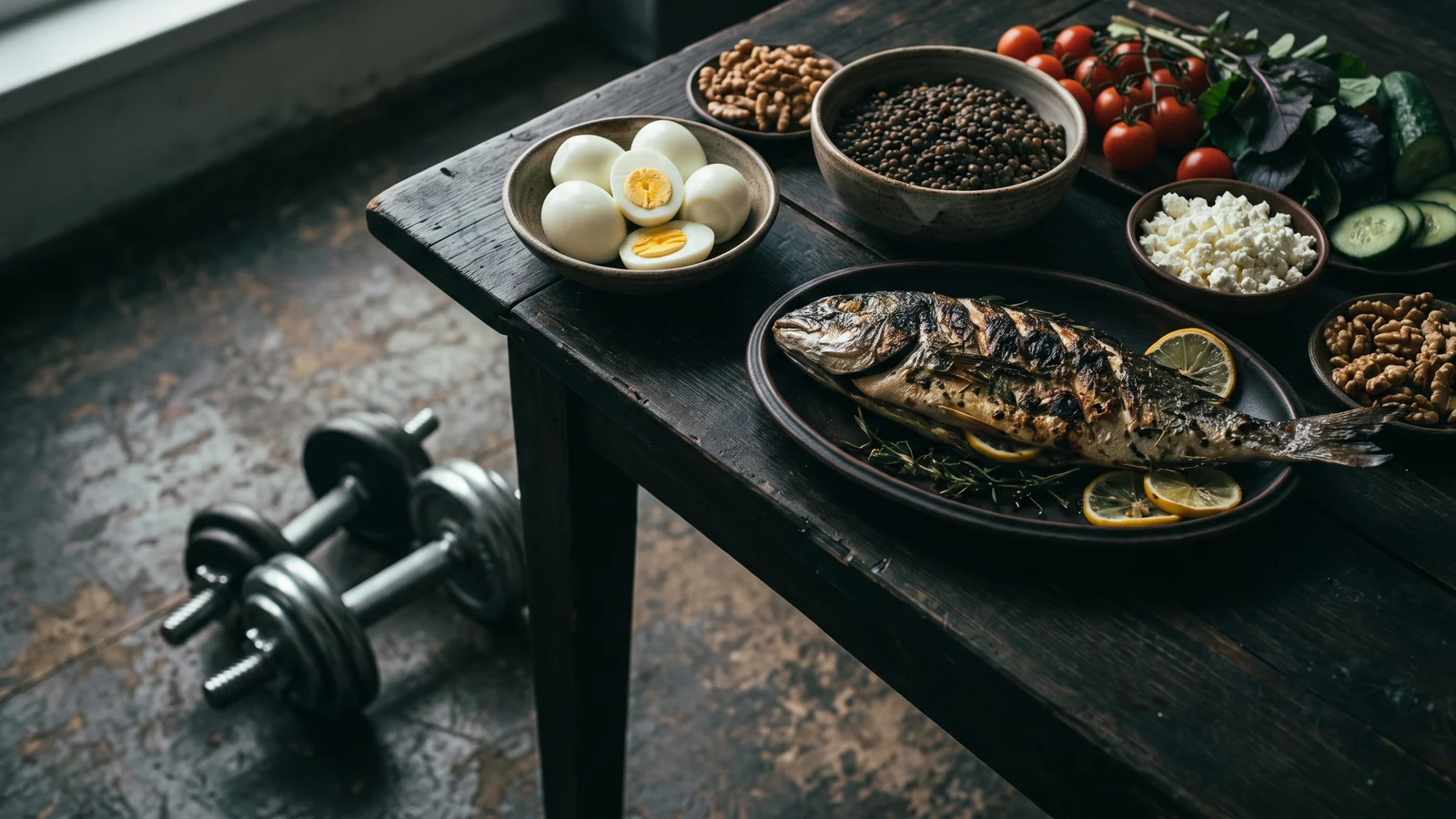
The 2025–2030 Dietary Guidelines for Americans, released on January 7, 2026, recommend 1.2 to 1.6 grams of protein per kilogram of body weight per day, which is higher than previous federal guidance and sits at the lower end of what sports nutrition research suggests for lifters. They also advise limiting highly processed foods.
Headlines about new guidelines tend to either overstate or dismiss them. This article takes a middle path: it summarizes what the guidance says, compares the protein range with two well-known sports nutrition sources, and explains what it means in practice for people who train. It is general information, not medical advice, and individual needs vary with health, age and goals.
What the new guidelines say
The Dietary Guidelines for Americans 2025–2030 were released on January 7, 2026, by the US Department of Agriculture and the Department of Health and Human Services. Their headline message is to eat real food. They encourage protein from both animal and plant sources, specify a daily protein range of 1.2 to 1.6 grams per kilogram of body weight, and advise limiting highly processed foods and sugar-sweetened drinks.
Beyond protein, the guidance names practical food targets: about three servings of vegetables and two of fruit per day, and two to four servings of whole grains while discouraging refined carbohydrates. Saturated fat stays capped at around 10 percent of daily calories, although the document also encourages whole foods that contain fat, such as eggs, nuts, avocados and full-fat dairy. These are reported by the official site and by summaries from medical and extension sources.
Several details are debated by nutrition scientists, and the guidelines are a policy document rather than a systematic review. Reading them as a general direction, rather than a personal prescription, is sensible. For people who lift, the single most relevant change is that the protein range is now explicit and higher than the old default, which gives a mainstream reference point for conversations with doctors, dietitians and family.
Translating grams per kilogram into food
A per-kilogram target sounds abstract until you do the arithmetic. For a person weighing 80 kilograms, 1.2 to 1.6 grams per kilogram works out to 96 to 128 grams of protein a day. Spread over three meals and a snack, that is roughly 25 to 40 grams at each eating occasion, which is a palm-sized portion of fish, poultry, tofu, eggs or Greek yoghurt rather than a heroic quantity.
Food choice matters as much as the number. The guidelines explicitly welcome both animal and plant sources, and a mixed pattern makes it easier to reach the range while also getting fibre, minerals and fats. Lentils, beans, dairy, eggs, fish, tofu and nuts all contribute. If you rely heavily on a single source, variety is worth adding, particularly for plant-based eaters who may need slightly larger servings to match the amino acid profile of animal protein.
It also helps to track for a few days rather than forever. Weigh or log what you normally eat, see where you land against your target range, and then adjust the one or two meals that are lowest in protein. Most people find breakfast and snacks are the gaps. Small additions such as yoghurt, eggs or a handful of legumes close the difference without turning every meal into a spreadsheet exercise.
How it compares with the sports research
The 2018 meta-analysis by Robert Morton and colleagues in the British Journal of Sports Medicine pooled 49 randomized trials with 1,863 participants. Protein supplementation during resistance training modestly improved strength and fat-free mass, adding 0.30 kilograms of fat-free mass on average. Importantly, supplementation beyond total intakes of about 1.62 grams per kilogram per day produced no further gains in fat-free mass, so the upper end of the new guideline range sits close to that plateau.
The International Society of Sports Nutrition's 2017 position stand is more generous. It describes 1.4 to 2.0 grams per kilogram as sufficient for most exercising individuals, and suggests that resistance-trained people in a calorie deficit may need 2.3 to 3.1 grams per kilogram to retain lean mass. For per-meal doses, it points to about 0.25 grams per kilogram, or roughly 20 to 40 grams, as a practical target.
These sources are not in conflict so much as aimed at different people. The guidelines address the general population, while the sports documents address people who train hard. A lifter in maintenance or a surplus is well served by the overlap between 1.4 and 1.6 grams per kilogram. A lifter dieting hard may reasonably choose more, with attention to total calories, food quality and medical advice where relevant.
Highly processed foods and the rest of the plate
A higher protein target does not mean building meals around supplements and packaged bars. The guidelines tell people to limit highly processed foods, including those with artificial flavours, dyes, preservatives and non-nutritive sweeteners. The evidence base is still developing, and definitions of processing are contested, but the practical advice is straightforward: get most of your protein from minimally processed foods, and use powders as a convenience rather than a foundation.
Whole-food protein usually arrives with other things you want. Fish brings fats, legumes bring fibre, dairy brings calcium, and eggs bring a range of micronutrients. Meeting your gram target with mostly whole foods also tends to make you feel fuller, which supports a calorie deficit if that is your goal. Our article on ultra-processed foods and calorie intake discusses how food processing can affect how much people eat.
Protein is also only one part of the plan. Carbohydrates fuel training, fats support hormones and absorption, and fruit, vegetables and whole grains cover fibre and micronutrients. The guideline targets for vegetables, fruit and whole grains are worth following even if your focus is muscle. A plate built around a protein source, a plant-heavy side and a whole-grain or starchy base satisfies both the guidelines and most sports nutrition advice.
Who should be cautious
Not everyone should simply raise protein. People with chronic kidney disease, or those advised to limit protein for another medical reason, should follow the advice of their own clinician rather than a general guideline or a sports position stand. Pregnant people, children, and those managing diabetes or eating disorders also have specific needs. The ranges here are aimed at generally healthy adults and are not a substitute for individual care.
Age is another factor. Morton's analysis reported that the benefit of protein supplementation decreased with advancing age, while the ISSN position notes older adults may do better with larger per-meal doses. Those findings may sound contradictory, but they reflect different questions: one is about gains from added supplements on top of existing diets, the other about the dose needed at each meal. Older adults should discuss targets with a professional.
Finally, remember what the numbers cannot do. Protein supports muscle only when the training stimulus is there, and eating more will not compensate for inconsistent lifting, poor sleep or an unsustainable diet. Treat the guideline range as a floor you can comfortably meet most days, then adjust upward within the sports nutrition ranges if your training volume, goals or calorie deficit justify it.
Put the new guidelines into practice
- check_circleCalculate your range — multiply your body weight in kilograms by 1.2 and by 1.6.
- check_circleSplit it across meals — aim for roughly 20–40 grams at each main meal.
- check_circleMix your sources — combine fish, eggs, dairy, legumes, tofu, nuts and lean meats.
- check_circleLimit highly processed foods — keep supplements and bars as a convenience, not the base.
- check_circleAdd plants every meal — aim for the guideline servings of vegetables, fruit and whole grains.
- check_circleAdjust for goals — consider the higher sports-nutrition ranges only during hard dieting.
- check_circleCheck with a professional — especially with kidney disease, pregnancy or other medical needs.
"The guideline range is a sensible baseline, not a ceiling or a prescription. Lifters often sit at its upper end, and the evidence suggests returns diminish past roughly 1.6 grams per kilogram."
— Calorie Fit Editorial Team
Frequently Asked Questions
How much protein do the 2025–2030 Dietary Guidelines recommend?
They recommend 1.2 to 1.6 grams of protein per kilogram of body weight per day, from both animal and plant sources. This is a higher range than earlier federal guidance and is aimed at the general population.
Is 1.6 grams per kilogram enough to build muscle?
A 2018 meta-analysis found no further gains in fat-free mass from supplementation beyond total intakes of about 1.62 grams per kilogram per day. The International Society of Sports Nutrition suggests 1.4 to 2.0 grams per kilogram for most exercising people.
Do I need more protein when cutting?
The International Society of Sports Nutrition suggests that resistance-trained people in a calorie deficit may need 2.3 to 3.1 grams per kilogram to retain lean mass. That is a specialist recommendation, so check it against your health and your dietitian's advice.
Is a high protein intake safe?
For generally healthy adults, intakes within the guideline range are considered appropriate, but people with kidney disease or other medical conditions may need to limit protein. If you are unsure, ask your doctor or a registered dietitian before changing your intake.
Sources
- Dietary Guidelines for 2025–2030: Recommendations From the USDA and HHS — American Family Physician, 2026
- Real Food: 2025–2030 Dietary Guidelines for Americans — US Department of Health and Human Services and US Department of Agriculture, 2026
- The New Dietary Guidelines for Americans 2025–2030 — Oklahoma State University Extension, 2026
- A systematic review, meta-analysis and meta-regression of the effect of protein supplementation on resistance training-induced gains in muscle mass and strength in healthy adults — British Journal of Sports Medicine, 2018
- International Society of Sports Nutrition Position Stand: protein and exercise — Journal of the International Society of Sports Nutrition, 2017
Educational information, not medical advice. See our Medical Disclaimer and Editorial Policy for how we research and verify articles.