Bio-Metric Tracking Accuracy
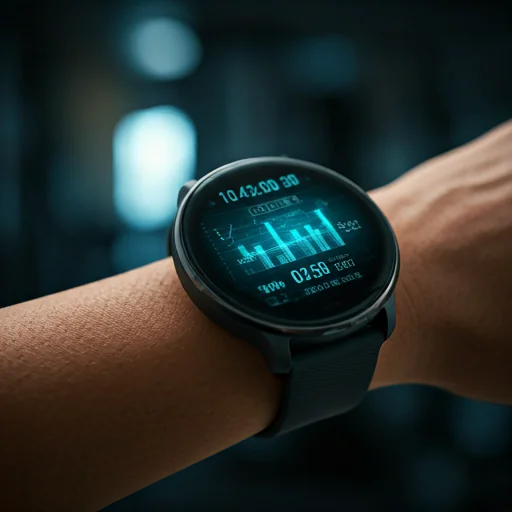
Wearable biometric devices have gone from novelty to training essential in under a decade. But most athletes using them are making decisions based on numbers they've never questioned. The heart rate your Garmin showed during yesterday's interval session — how accurate was it, really? The 740 calories your Apple Watch said you burned in that HIIT class — should you eat those back? The data is only as useful as its accuracy allows. Here is what the research actually says.
Heart Rate: The Most Reliable Metric
Optical heart rate monitoring (photoplethysmography — PPG) uses green LED light to detect blood flow changes under the skin. Under steady-state conditions — walking, cycling, running at moderate pace — modern optical HR monitors perform well. A 2020 study in the JMIR mHealth and uHealth found that two wrist-worn optical trackers generally measured heart rate accurately during moderate exercise in young and older adults, though some unexpected outlier readings occurred.
The accuracy degrades significantly during high-intensity intervals, strength training, and any activity with significant wrist movement. During high-intensity intervals, error tends to be higher and varies widely between devices. The cause is motion artefact — wrist movement creates optical noise that the algorithm misinterprets as pulse. A chest strap largely avoids this problem, using electrical signals rather than light.
Calorie Burn: The Number You Should Stop Trusting
The calorie burn figure on your wearable is the least reliable number it produces. A landmark 2017 Stanford University study tested seven popular fitness trackers and found that no device had a median error below 20% for energy expenditure. The least accurate device — the PulseOn — had a median error of 92.6%. Even the best performer (the Fitbit Surge) showed a 27.4% median error. The Apple Watch had the lowest heart rate error, about 2%.
This is not primarily a hardware problem — it is a modelling problem. Calorie expenditure depends on individual metabolic rate, muscle efficiency, body composition, fitness level, and even gut microbiome composition. No wrist sensor can measure these directly. Devices estimate calorie burn by combining heart rate with demographic data (age, sex, weight, height) via proprietary algorithms. They are calibrated on population averages and diverge significantly for individuals at the edges — high-performance athletes, very lean people, or those with atypical heart rate responses to exercise.
"most wrist-worn devices adequately measure HR in laboratory-based activities, but poorly estimate EE, suggesting caution in the use of EE measurements as part of health improvement programs."
— Shcherbina et al., Journal of Personalized Medicine (2017)
HRV: High Signal, Low Raw Accuracy
Heart Rate Variability (HRV) — the millisecond variation between consecutive heartbeats — is one of the most valuable recovery and readiness metrics available to athletes. High HRV correlates with parasympathetic dominance, meaning the nervous system is well-recovered. Low HRV indicates residual stress, under-recovery, or overtraining.
The challenge: raw HRV values are highly individual and context-dependent. A "good" HRV of 70ms for one athlete might represent extreme fatigue for another whose baseline is 120ms. Devices are reasonably consistent in their own relative HRV measurements over time (intra-device reliability is acceptable), but absolute values differ significantly between devices — meaning you cannot compare your Whoop score to a friend's Garmin score directly.
How to use HRV correctly: Track trend, not absolute value. Your personal 30-day rolling average is the baseline. A reading well below that baseline, especially if it persists for several days, may suggest sub-optimal recovery — regardless of what number the device shows.
Sleep Staging: Better Than Nothing, Worse Than a Lab
Consumer wearables estimate sleep stages using a combination of accelerometer data (movement), heart rate, and HRV. The gold standard — polysomnography (PSG) — uses electroencephalography (EEG) brain wave monitoring. These are fundamentally different measurement methods.
Validation studies against polysomnography, such as Chinoy et al. in SLEEP (2021), found that consumer devices perform only moderately at identifying sleep stages, with mixed and often poor results for deep and REM sleep. Stage classification is the weakest part of consumer sleep tracking, and deep sleep — the most anabolically important stage — is frequently misclassified.
Practical implication: Use wearable sleep data to track consistency (same bedtime, same wake time, similar total sleep) and relative trends (is your HRV rising or falling week over week?). Do not use the device's reported deep sleep minutes as a precise metric.
Use Calculators, Not Just Wearables
Your wearable's calorie estimate can be off by 25% or more. Use our evidence-based Calorie Calculator — grounded in validated TDEE equations like Mifflin-St Jeor — as your primary calorie target, and treat your wearable's figure as secondary reference only.
Open Calorie Calculator calculateERROR RANGE
VO2 Max Estimates: Useful Direction, Not Absolute Value
GPS-based fitness trackers (Garmin, Polar, Suunto) estimate VO2 max from the relationship between heart rate and pace during outdoor runs. The algorithms have improved considerably — In a 2025 study of the Garmin Forerunner 245, the FirstBeat-based estimate was within about 3% MAPE (2.8%) of lab-measured VO2 max in moderately trained athletes, but error rose to about 10% in highly trained athletes.
Accuracy is likely to be lower without GPS pace data, so treadmill running, cycling, and rowing may produce less reliable VO2 max estimates on some devices. High heat and humidity also distort readings because elevated heart rate (from thermoregulation, not exercise intensity) inflates the perceived effort signal.
Best use case: Track your device's VO2 max estimate over months to measure aerobic development. A consistent upward trend is meaningful signal. The absolute number (52 vs. 54 mL/kg/min) should not be quoted without a laboratory test.
A Framework for Using Biometric Data Intelligently
-
check_circle
Trust: Heart rate during steady-state cardio Optical HR is reliable enough for zone training at moderate intensities. Use a chest strap for intervals and strength sessions where accuracy matters most.
-
check_circle
Trust: HRV trends over 4+ weeks Your rolling 30-day HRV trend is a reliable readiness signal. Don't react to single-day drops — react to sustained drops over 5–7 days.
-
cancel
Don't trust: Calorie burn numbers Use validated TDEE calculators for nutrition decisions. Treat wearable calorie data as rough directional reference only — never eat back wearable-reported exercise calories at face value.
-
cancel
Don't trust: Absolute sleep stage minutes Use sleep data for consistency tracking (did you get 7+ hours?) and broad trend monitoring. Don't obsess over "deep sleep: 48 min vs. 52 min" — that granularity is beyond consumer device accuracy.
Validate With Body Composition Metrics
Wearable data is tracking proxy metrics. For actual body composition changes, use our Body Fat Calculator to measure what's actually happening to your fat and muscle mass over time — independent of what your device says.
Body Fat Calculator arrow_forwardSources
- Accuracy in Wrist-Worn, Sensor-Based Measurements of Heart Rate and Energy Expenditure in a Diverse Cohort — Journal of Personalized Medicine (Shcherbina et al.), 2017
- Performance of seven consumer sleep-tracking devices compared with polysomnography — SLEEP (Chinoy et al.), 2021
- Performance of Four Commercial Wearable Sleep-Tracking Devices Tested Under Unrestricted Conditions at Home in Healthy Young Adults — Nature and Science of Sleep (Chinoy et al.), 2022
- Validity of V̇O2max estimates from the forerunner 245 smartwatch in highly vs. moderately trained endurance athletes — European Journal of Applied Physiology (Engel et al.), 2025
- Validation of nocturnal resting heart rate and heart rate variability in consumer wearables — Physiological Reports (Dial et al.), 2025
Educational information, not medical advice. See our Medical Disclaimer and Editorial Policy for how we research and verify articles.