Ultra-Processed Foods and Overeating: What the Trial Shows
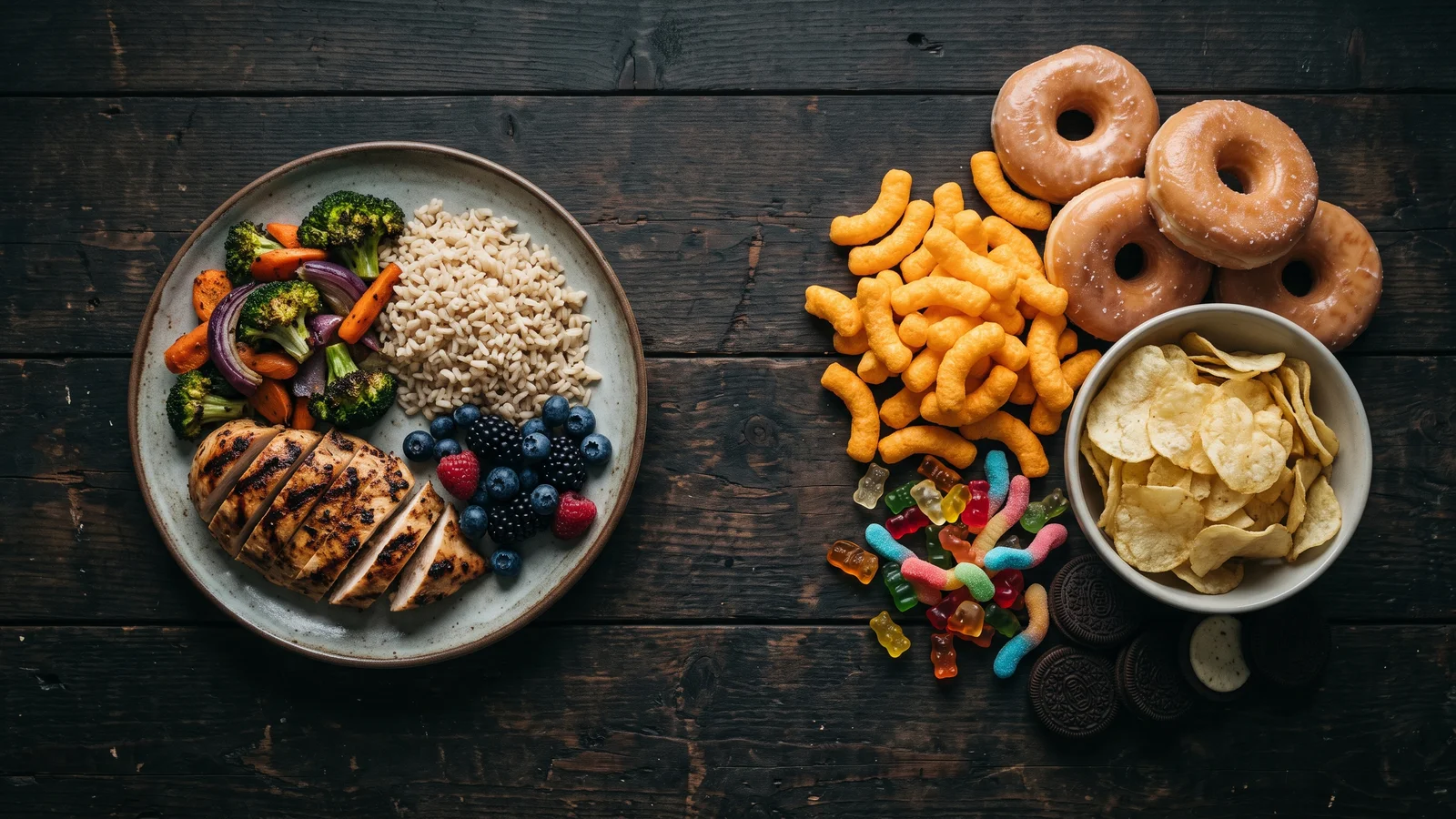
In a tightly controlled NIH trial, adults eating an ultra-processed diet consumed about 508 more calories per day than when eating an unprocessed diet, even though the meals were matched for presented calories, macronutrients, sugar, sodium and fiber. The 2019 study, led by Kevin Hall and published in Cell Metabolism, is still one of the strongest experiments on the topic.
This article explains how the trial worked, what it can and cannot tell us, and how to use the findings without turning your kitchen into a stress test. The goal is a practical food environment that makes eating the right amount easier.
How the NIH trial was designed
Hall and colleagues recruited 20 weight-stable adults, with an average age of about 31 and a BMI of about 27, and admitted them to the NIH Clinical Center. Participants were randomly assigned to eat either an ultra-processed or an unprocessed diet for two weeks, then switched immediately to the other diet for two weeks.
Because everyone lived on the ward, researchers could measure what people ate rather than relying on memory. Meals were designed to be matched for presented calories, energy density, macronutrients, sugar, sodium and fiber. Participants were told to eat as much or as little as they wanted, so any difference in intake came from the food, not from instructions.
A crossover design is powerful because each person acts as their own control, which removes much of the noise between individuals. The tradeoff is scale. Twenty people over four weeks cannot tell us about long-term behavior, so the result is best seen as strong evidence of mechanism, not a full picture of real-world eating.
What happened to intake and body weight
Energy intake was about 508 kcal per day higher during the ultra-processed phase than during the unprocessed phase, a difference that was highly statistically significant. The extra energy came from carbohydrate, about 280 kcal per day, and fat, about 230 kcal per day, while protein intake was essentially unchanged between the two diets.
Body weight followed intake. On average, participants gained about 0.9 kg during the two weeks on the ultra-processed diet and lost about 0.9 kg during the two weeks on the unprocessed diet. The authors reported that weight changes were strongly correlated with energy intake, with a correlation coefficient of 0.8.
Two weeks of weight change includes some water and glycogen, so it should not be read as pure fat gain or loss. Even so, the direction is clear and the size is meaningful. A habitual surplus of several hundred calories can add up over months, which makes the finding relevant to anyone who struggles with appetite.
Why ultra-processed food may drive eating
The trial shows that the effect occurred even when nutrients on paper were similar, so researchers look to other properties. Ultra-processed foods tend to be soft, easy to eat quickly, energy dense and engineered to taste appealing. These features can make it easier to eat more before fullness signals catch up with the meal.
Protein is another candidate. Because protein intake did not rise, the extra calories came from carbohydrate and fat, and the trial design did not isolate a single cause. Mechanisms such as eating speed, texture, palatability and hormonal responses are active research questions, and this trial on its own does not prove any one of them.
It is worth being humble about the label too. Ultra-processed covers a wide range, from sugary cereals and instant noodles to some wholegrain breads and protein bars. Not every item is equally problematic, and the research is strongest for the overall dietary pattern, not for individual products on the shelf.
What the trial cannot tell you
The study was small, short and conducted in a controlled setting where all food was provided. Real life includes cooking skills, budgets, cultural foods, hunger, stress and social meals. The result shows that a diet built from ultra-processed foods can raise intake under controlled conditions, but it cannot tell you how much any particular person will change.
It also does not mean that processed foods are dangerous in every context. Frozen vegetables, canned beans, yogurt and tinned fish are processed in a basic sense and remain useful, affordable choices. Athletes with high energy needs may even benefit from convenient, energy-dense foods around training sessions.
Finally, observational research linking ultra-processed food to disease has the usual limits of confounding. The NIH trial is valuable because it is experimental, yet its focus was energy intake and short-term weight. Treat it as a reason to prioritize whole foods, not as proof that every packaged item needs to be avoided.
How to apply this to your own plate
Begin with your most frequent meals, not your treats. If breakfast and lunch are built around minimally processed foods such as eggs, oats, potatoes, rice, beans, fish, meat, fruit and vegetables, you gain a stable base. Then it matters much less whether an evening snack comes from a packet.
Make the whole-food option the easy option. Batch-cook protein and carbohydrate sources, keep washed fruit visible and store packaged snacks out of sight. Because the trial let people eat as much as they wanted, environment and convenience matter. You are trying to lower the effort of eating well, not to rely on constant restraint.
Track your results rather than the label. If your weight, hunger and energy are stable, you do not need a perfect diet. If you are struggling to lose fat, swap two or three packaged staples for whole-food versions for a few weeks, and watch your appetite and the scale. Adjust calories as needed.
Cutting back on ultra-processed food without obsessing
- check_circleStart with staples — fix your most frequent meals before worrying about snacks.
- check_circleBuild around protein — include a protein source at each main meal.
- check_circlePrep ahead — batch-cook rice, potatoes, beans and meat for fast meals.
- check_circleUse useful processed foods — frozen vegetables, canned beans, yogurt and tinned fish are fine.
- check_circleControl the environment — keep fruit visible and packaged snacks out of sight.
- check_circleTest for two to four weeks — monitor weight, hunger and energy before judging.
"The most useful lesson from the NIH trial is not to fear packaging, but to build a food environment where eating the right amount takes less effort."
— Calorie Fit
Frequently Asked Questions
How many extra calories did people eat on the ultra-processed diet?
In the 2019 NIH trial led by Kevin Hall, participants ate about 508 more calories per day on the ultra-processed diet than on the unprocessed diet, mostly from extra carbohydrate and fat rather than protein.
Did the two diets contain the same nutrients?
Meals were designed to be matched for presented calories, energy density, macronutrients, sugar, sodium and fiber, so the intake difference was not explained by those basic nutrition label numbers alone.
Do I need to avoid all processed food?
No, you do not. Many processed foods such as frozen vegetables, canned beans, yogurt and tinned fish are nutritious and practical, and the evidence supports shifting your overall pattern toward whole foods, not eliminating every packaged item.
Is two weeks long enough to prove anything about fat loss?
Two weeks is enough to show a clear effect on appetite and short-term weight, but it cannot prove long-term fat loss. Some of the weight change includes water, so use the trial as strong evidence of a mechanism and not as a weight-loss forecast.