Reverse Dieting: How to Break Plateaus Without Gaining Fat
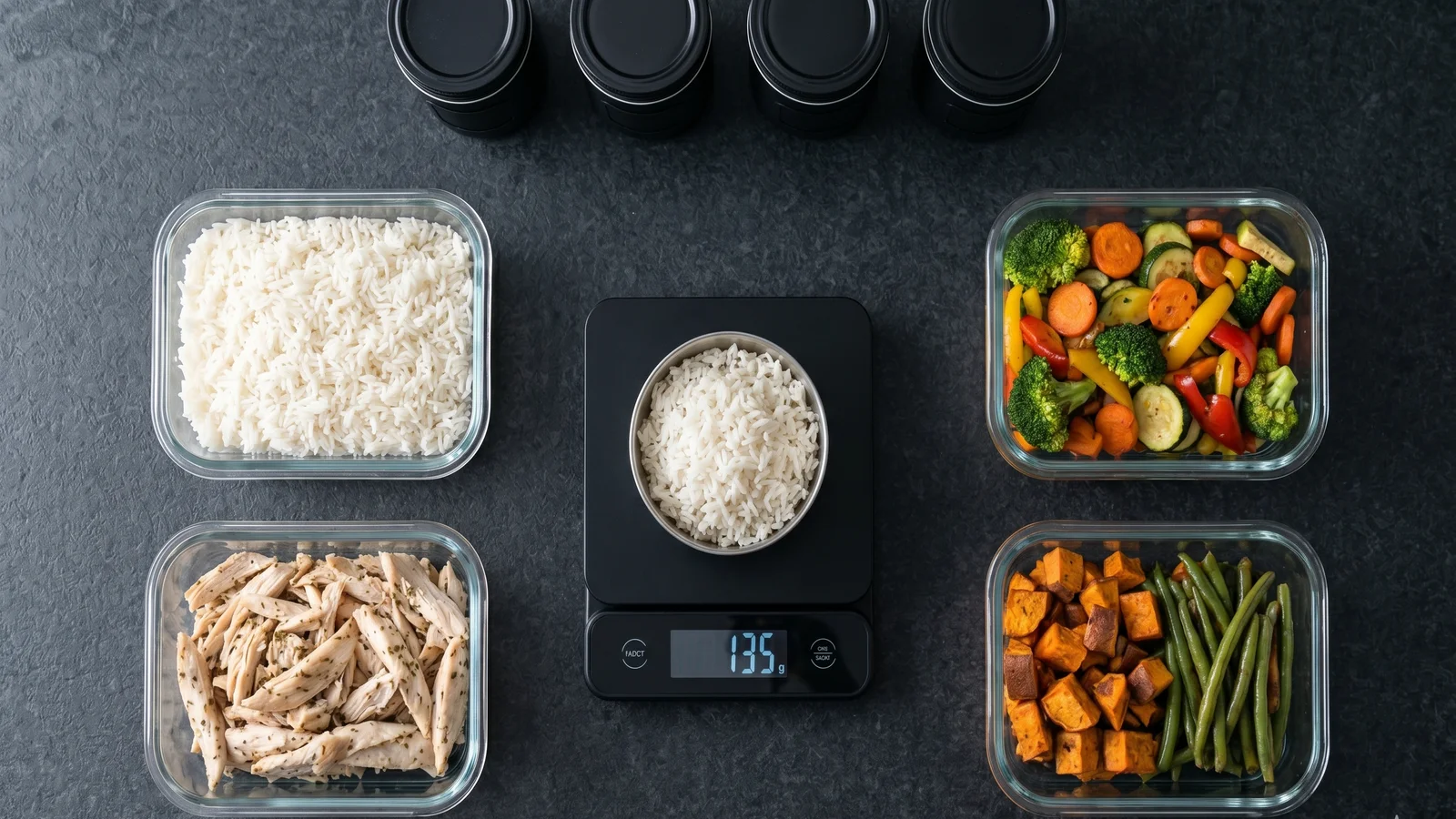
You've been in a calorie deficit for months. The scale moved confidently at first, then slowed, then stopped — despite continuing the same diet that was working before. You're eating less than ever and losing nothing. This is not a failure of willpower. It is a predictable biological response called metabolic adaptation, and reverse dieting is the most evidence-supported strategy for addressing it without regaining the fat you worked to lose.
What Is Metabolic Adaptation?
The human body is extraordinarily resistant to sustained energy deficit. When caloric intake falls below expenditure for an extended period, several adaptive mechanisms activate to reduce total daily energy expenditure (TDEE) and preserve body mass. This is often called adaptive thermogenesis — a downward shift in metabolic rate beyond what is predicted by changes in body mass alone.
The mechanisms are multi-pronged. Resting metabolic rate falls as lean mass decreases. Non-exercise activity thermogenesis (NEAT) — the calories burned through unconscious movement like fidgeting, posture, and general restlessness — drops significantly; research by Dr. James Levine at the Mayo Clinic showed NEAT reductions of up to 500 kcal/day in individuals in a deficit. Thyroid hormone (particularly T3) decreases, further slowing metabolic rate. Leptin — the satiety hormone — falls sharply, increasing hunger signalling and reducing energy expenditure. Together, these adaptations can reduce TDEE by 10–15% or more below predicted values.
The plateau you experience after weeks or months of dieting is not imaginary — your body has genuinely become more efficient, meaning the same food intake that previously produced a deficit now approaches maintenance. Eating even less is often counterproductive: it deepens the adaptive response, accelerates muscle loss, and is psychologically unsustainable.
What Is Reverse Dieting?
Reverse dieting is the practice of systematically and gradually increasing caloric intake from a post-diet low back toward — and eventually to — maintenance. Rather than abruptly returning to pre-diet eating patterns (which predictably produces rapid fat regain), reverse dieting adds a small number of calories each week, giving the metabolism time to upregulate without creating a sustained surplus.
The goal is to restore TDEE to a higher level while keeping body fat stable. By the time you reach maintenance calories on a reverse diet, your metabolism is functioning at a higher rate than it was during the depths of the deficit — making the subsequent diet phase, if you choose to do another, more effective because it starts from a higher metabolic baseline.
"The most common mistake in fat loss is treating the deficit as a permanent state. Metabolic adaptation is real, measurable, and addressable. Reverse dieting is the structured way to address it."
— Adapted from research on adaptive thermogenesis, Rosenbaum & Leibel
How to Execute a Reverse Diet
The starting point for a reverse diet is knowing your current intake. If you have been tracking calories, you know the number. If you have not, spend one week tracking accurately without changing intake to establish your baseline — use our TDEE Calculator to estimate where your maintenance should be, then compare to your current eating pattern.
Step-by-Step Reverse Diet Protocol
- check_circleWeek 1: Establish your current intake baseline. Weigh and log everything accurately for 7 days without changing your diet. Calculate your daily average.
- check_circleWeek 2 onwards: Add 50–100 calories per week. Most of this addition should come from carbohydrates and fats — keep protein constant at 1.6–2.2 g/kg of bodyweight.
- check_circleWeekly check-in: Weigh daily and take the 7-day average. If weight is stable or dropping, continue adding. If weight rises by more than 0.5 kg in a week, hold at current calories for 2 weeks before adding again.
- check_circleEnd point: Continue until you reach your estimated TDEE. This typically takes 8–16 weeks depending on how low calories dropped during the preceding diet phase.
- check_circleMaintenance phase: Spend 4–8 weeks eating at maintenance before beginning a new deficit. This consolidates the metabolic restoration.
Macronutrient Distribution During a Reverse Diet
Protein should be held constant throughout the reverse diet at the higher end of the evidence-based range: 1.8–2.2 g/kg of bodyweight. This protects lean mass during the transition and supports muscle protein synthesis — particularly important if you are also resistance training, which you should be during any fat-loss or maintenance phase.
The additional calories each week are most efficiently added as carbohydrates in the context of active individuals. Carbohydrates replenish muscle glycogen, support training performance (which NEAT and activity levels depend on), and — at moderate insulin levels — are less likely to drive fat storage than the equivalent calorie surplus from dietary fat. That said, the source of additional calories matters less than the total; distribute between carbohydrates and fats according to preference and performance.
Use our Macro Calculator to set precise targets for each phase. Enter your goal as "maintenance" during the reverse diet and adjust weekly as your calorie target increases. Tracking precision is non-negotiable during a reverse — an error of 200 kcal/day in either direction can make the difference between controlled restoration and unexpected fat gain.
Signs That Metabolic Adaptation Is Reversing
Positive signs during a well-executed reverse diet include: improved sleep quality (leptin restoration improves sleep signalling), higher training energy and performance (glycogen availability is no longer chronically depleted), improved mood and reduced irritability (low carbohydrate and caloric restriction suppresses dopamine and serotonin function), reduced hunger between meals (leptin and satiety hormones normalising), and — counterintuitively — warmer body temperature (thyroid function improving, increasing heat production).
Some individuals also notice improvements in hormonal markers — testosterone in men often drops during deep caloric restriction and recovers during a reverse; menstrual cycle regularity in women frequently improves as energy availability normalises. These are signs the body is exiting a stress state, not evidence that you are eating too much.
Reverse Diet vs. Diet Break: What's the Difference?
A diet break is a planned period of maintenance eating inserted into a longer diet phase — typically 1–2 weeks at maintenance calories after every 6–12 weeks of deficit. Research by Byrne et al. (2017) in the "MATADOR" study showed that intermittent diet breaks resulted in greater fat loss and better maintenance of resting metabolic rate compared to continuous restriction, likely because they partially attenuate adaptive thermogenesis before it fully takes hold.
A reverse diet, by contrast, is a sustained structured increase from deficit to maintenance over weeks or months. It is typically used at the end of a diet phase — after the competition, photoshoot, or goal event — rather than embedded within one. Both strategies are valid and address metabolic adaptation through slightly different mechanisms: diet breaks prevent deep adaptation from developing; reverse dieting restores metabolism after adaptation has occurred.
Common Mistakes in Reverse Dieting
- warningAdding calories too fast. Adding 200–300 kcal/week instead of 50–100 creates a surplus before the metabolism can upregulate to match, resulting in fat gain.
- warningNot tracking. Perception of intake is unreliable. Without precise logging, it is impossible to know whether increases are being applied correctly or whether the body is responding as expected.
- warningStopping training. Resistance training during a reverse diet is essential. Without the muscle-building stimulus, additional calories are more likely to accumulate as fat than be partitioned toward lean mass.
- warningPanicking at scale fluctuations. Increased carbohydrate intake causes water retention (1g glycogen binds ~3g water). A 1–2 kg scale increase in the first 2 weeks is predominantly water and glycogen, not fat. Do not respond by cutting calories back.
Frequently Asked Questions
Will I gain fat during a reverse diet?
If executed correctly — adding 50–100 kcal/week and monitoring weight closely — fat gain is minimal. Some individuals complete an entire reverse diet without any measurable fat gain. Initial weight gain (1–2 kg in the first 2 weeks) is primarily glycogen and water, not fat tissue. The key is patience and precision in the rate of caloric increase.
How do I know when to start a reverse diet?
Classic indicators: your scale weight has not changed in 3+ weeks despite being in a tracked deficit; you feel constantly fatigued or cold; training performance has significantly declined; hunger is severe and persistent; you have been in a deficit for more than 12–16 continuous weeks. Any combination of these suggests metabolic adaptation has taken hold.
How long should I stay at maintenance after a reverse diet?
A minimum of 4 weeks at maintenance is recommended before beginning another deficit. Eight to twelve weeks is better if hormonal markers were significantly disrupted during the prior diet phase. The maintenance period consolidates metabolic restoration, allows hormones to fully normalise, and sets a higher baseline TDEE for the next diet to work from.
Can I reverse diet without tracking calories?
In theory, yes — but in practice, precision is difficult without tracking. The increments involved (50–100 kcal/week) are too small to judge by feel. If you are unwilling to track, a modified approach is to add one extra serving of a specific food each week (e.g., 30g of oats or an additional tablespoon of olive oil) and monitor your weekly average weight. This provides some structure without full calorie counting.