Strength Training for Women Over 40: The Complete Science-Backed Guide
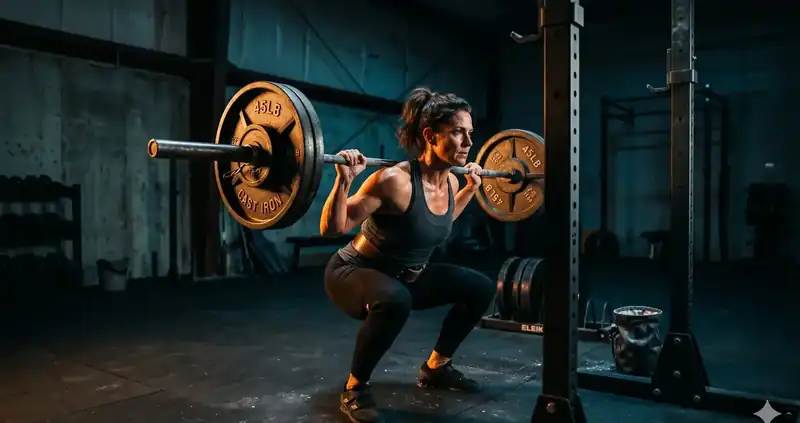
The fitness industry has historically told women over 40 to do more yoga, walk more, and eat less. The science says the opposite. The hormonal changes of perimenopause and menopause — declining oestrogen, progesterone, and testosterone — create a physiological environment that accelerates muscle loss, weakens bones, redistributes body fat to the abdomen, and blunts the metabolic rate. The single most effective intervention against every one of these changes is progressive resistance training. Not pilates. Not cardio. Lifting heavy, consistently, with progressive overload applied over months and years.
What Actually Happens to Muscle After 40
Sarcopenia — age-related muscle loss — begins in the 30s at a rate of roughly 3–5% per decade in sedentary individuals. After 40, and particularly accelerating at menopause (average age 51), the rate increases to 5–8% per decade without intervention. By age 70, a woman who has not strength trained may have lost 30–40% of her peak muscle mass. The consequences are significant: reduced resting metabolic rate (muscle is metabolically expensive tissue), reduced insulin sensitivity, increased fall and fracture risk, and impaired quality of life.
The primary hormonal driver of accelerated muscle loss at menopause is the decline in oestrogen. Oestrogen has anabolic (muscle-building) and anti-catabolic (muscle-preserving) effects that are poorly understood even now, but consistently measurable — women lose muscle significantly faster after menopause than in the decade before. Testosterone, which also declines with age in women, contributes to reduced muscle protein synthesis. The combined effect creates a physiological window where the body is highly predisposed to tissue loss and needs a countervailing stimulus — which resistance training provides directly.
Bone Density: The Underrated Crisis
Women lose approximately 1–3% of bone density per year in the first 5–7 years after menopause, driven almost entirely by oestrogen withdrawal. Oestrogen inhibits osteoclast activity (bone breakdown); without it, resorption outpaces formation and net bone loss occurs rapidly. By age 65, one in three women has osteoporosis; by 80, one in two. Hip fractures in women with osteoporosis carry a 30% mortality rate within one year — making bone density one of the most critical health metrics for women over 40.
Resistance training is one of the few non-pharmacological interventions proven to increase bone mineral density in postmenopausal women. A meta-analysis published in the Journal of Bone and Mineral Research found that progressive resistance training increased spine and hip bone density by 1–3% over 12 months, and maintained bone density versus accelerating decline in controls. The mechanism is mechanical: bones adapt to compressive and tensile loads by increasing density. Weight-bearing exercises — squats, deadlifts, lunges, rows — generate these loads. Cycling and swimming do not.
"Progressive resistance exercise is the most effective non-pharmacological strategy for preserving bone mineral density in postmenopausal women, with the greatest benefits at the spine and hip — the sites of highest fracture risk."
— Zhao et al., Journal of Bone and Mineral Research, 2017
Hormones, Body Composition, and the Menopause Shift
Oestrogen influences where the body stores fat. Pre-menopause, fat tends to distribute peripherally — hips, thighs, and gluteal region. Post-menopause, the dominant fat distribution pattern shifts to visceral — the metabolically dangerous fat stored around the organs of the abdomen. Visceral fat is strongly associated with cardiovascular disease, Type 2 diabetes, and systemic inflammation. This shift happens even without changes in total body weight or caloric intake.
Resistance training directly counteracts visceral fat accumulation. A 2017 meta-analysis in Obesity Reviews found that resistance training reduced visceral fat by an average of 6% in postmenopausal women even without caloric restriction. Combined with a modest calorie deficit and adequate protein, this effect is substantially amplified. Use our TDEE Calculator to establish your maintenance calories and set a conservative 300 kcal deficit — aggressive cuts accelerate muscle loss at a time when preserving lean mass is the priority.
Training Principles: What Changes After 40
The fundamentals of resistance training do not change after 40 — progressive overload, compound movements, sufficient training volume, and adequate recovery remain the cornerstones. What changes is the recovery timeline and the injury risk calculus. Connective tissue — tendons and ligaments — loses elasticity with age and takes longer to adapt than muscle. This means load progression should be more gradual, warm-up protocols should be extended, and sleep and recovery nutrition should be treated as non-negotiable training inputs rather than optional extras.
Recommended Weekly Structure
- check_circle2–3 resistance sessions per week: Full-body sessions or upper/lower splits. Each session should include at least one compound hip-hinge (deadlift, Romanian deadlift), one squat pattern (goblet squat, barbell squat), one horizontal push (bench press, press-up), and one horizontal pull (row).
- check_circleLoad in the 6–12 rep range: This rep range optimises hypertrophy and provides sufficient mechanical load for bone density stimulus. Avoid staying exclusively in the 15–20 rep "toning" range — lighter loads insufficient to drive bone adaptation or meaningful muscle retention.
- check_circleProgressive overload every 1–2 weeks: Add small increments — 1–2.5kg per side — when you can complete the top of your rep range with good technique for 2 consecutive sessions.
- check_circle1–2 Zone 2 cardio sessions: Complement resistance training with aerobic work for cardiovascular health, cortisol management, and metabolic flexibility. See our Zone 2 guide.
- check_circleAt least one full rest day: Recovery capacity declines with age. Insufficient rest days within a weekly structure is the most common reason women over 40 plateau or get injured.
Protein: The Most Underconsumed Nutrient in This Demographic
Women over 40 typically under-consume protein relative to their muscle preservation needs. Population surveys consistently show average protein intake of 0.8–1.0g/kg/day among this group — well below the 1.6–2.0g/kg recommended for active women seeking to preserve or build lean mass. The anabolic resistance associated with ageing means the body becomes less efficient at building muscle from a given amino acid stimulus, partially compensated by consuming more protein per meal and ensuring adequate leucine at each sitting.
A practical target is 1.6–2.0g of protein per kilogram of bodyweight per day, distributed across 3–4 meals each containing at least 30–40g of complete protein. For a 65kg woman, this means 104–130g of protein daily — approximately four meals of chicken breast, Greek yoghurt, eggs, fish, or cottage cheese. Use the Macro Calculator to build a macro split with protein as the anchor, then fill remaining calories with carbohydrates and fats based on your training schedule.
Managing Perimenopausal Symptoms Through Training
Research shows resistance training reduces the frequency and severity of menopausal symptoms beyond the musculoskeletal benefits. A 2023 study in Menopause found that 12 weeks of progressive resistance training reduced hot flash frequency by 39% and improved sleep quality scores by 30% in perimenopausal women compared to controls. The mechanism involves improved thermoregulation, reduced systemic inflammation, better stress hormone regulation, and elevated serotonin and endorphin levels from consistent exercise.
Mood instability and anxiety during perimenopause — driven by fluctuating oestrogen and progesterone — are also attenuated by regular resistance training. Exercise-induced BDNF (brain-derived neurotrophic factor) production supports neuroplasticity and mood regulation in ways that partially compensate for the neurological effects of hormone fluctuation. This is why many women report that consistent training during perimenopause is one of the most effective mental health interventions they have used.
Frequently Asked Questions
Will lifting weights make women over 40 bulky?
No. Women have approximately 10–20 times less testosterone than men, making the extreme muscular hypertrophy associated with "bulking" physiologically impossible without anabolic steroids. What resistance training produces in women over 40 is the appearance of being leaner, more toned, and more upright — because muscle takes up less space than fat at the same weight, and posture improves dramatically as upper back and glute strength develop.
Is it safe to lift heavy weights after 40 with no prior experience?
Yes, with appropriate progression. Beginners over 40 should prioritise learning technique before loading — bodyweight and light dumbbell movements for the first 4–6 weeks establish motor patterns and tendon adaptation before heavier loads are introduced. A qualified strength coach for the first 8–12 sessions dramatically reduces injury risk and accelerates progress by identifying individual movement compensations.
Should I train differently during perimenopause?
The fundamentals remain the same, but recovery sensitivity increases. During periods of significant hormonal fluctuation — particularly in the late luteal phase before menstruation — some women find their strength drops and fatigue is higher. Reducing intensity by 10–15% during these phases and treating them as recovery-priority weeks is a practical autoregulation strategy. Tracking HRV alongside training can help identify these windows objectively. See our HRV guide.
How long before I see results from resistance training after 40?
Neural adaptations — improved strength from better motor recruitment — are visible within 2–4 weeks. Structural muscle changes typically become apparent at 8–12 weeks. Body composition changes (visible fat loss, muscle definition) are usually noticeable at 12–16 weeks. Bone density changes require 6–12 months to measure on a DEXA scan. The timeline is longer than in younger years, but the adaptations are genuine and accumulative — women who start lifting at 45 and maintain it reach 65 in dramatically better physical condition than those who do not.
Does HRT (hormone replacement therapy) affect how women over 40 should train?
HRT does not change the fundamental training approach, but it does improve the hormonal environment for muscle building and recovery. Women on oestrogen-containing HRT show better muscle protein synthesis responses, faster recovery, and less severe perimenopausal symptoms — allowing for higher training volumes that accelerate adaptation. If you are considering HRT alongside a resistance training programme, the combination is synergistic; the training maximises the benefits of the hormonal support and vice versa.