Exercise Snacks: Do 1-Minute Bursts Count?
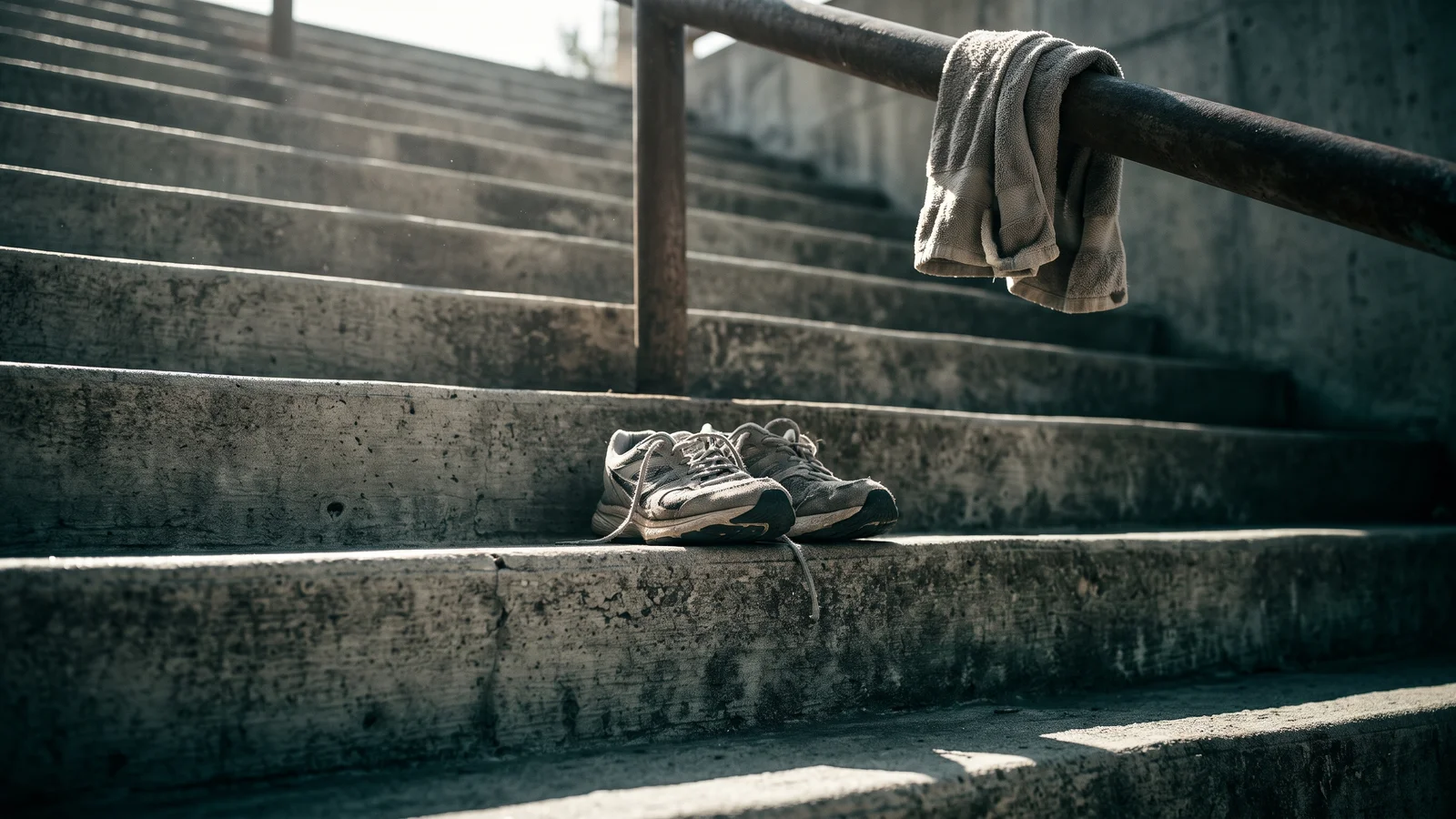
Exercise snacks are very short bursts of hard effort, usually one to two minutes, woven into the day. In large observational studies, people who never exercised but did a few such bursts daily had notably lower mortality risk than those who did none.
That does not make a stair sprint a replacement for a proper training week, and the evidence is observational. But for anyone who says they have no time, it is a credible and low-risk place to begin. Here is what the research shows, what it cannot show, and how to put it into practice.
What counts as an exercise snack
Researchers use the term vigorous intermittent lifestyle physical activity, or VILPA, for short bursts of hard effort that happen during ordinary life rather than in a planned workout. Think of climbing stairs quickly, walking fast uphill, carrying heavy shopping, or chasing a child across a park. The common thread is that your breathing becomes heavy and conversation gets difficult for a short time.
The bursts are brief on purpose. In the studies discussed here, the activity was captured by a wrist-worn accelerometer and counted in bouts of up to about two minutes. That makes it different from interval training, where you schedule repeated hard efforts with planned rests, and different from a steady walk, which is usually moderate rather than vigorous.
The idea matters because the most common reason people give for not exercising is lack of time. A burst of one to two minutes asks for no changing clothes, no equipment and no gym. If the health signal seen in the research holds up, it lowers the barrier to starting, which is often the hardest step for people who currently do nothing.
What the UK Biobank studies found
A 2022 Nature Medicine paper led by Emmanuel Stamatakis followed 25,241 adults who reported no leisure-time exercise, with a mean age of 61.8, for an average of 6.9 years. During that time 852 deaths occurred. More vigorous bursts were associated with lower risk of death in a near-linear pattern, with no sign of a threshold that had to be passed first.
At the median of about three bursts a day, each lasting one or two minutes, the authors reported a 38–40% lower risk of all-cause and cancer mortality and a 48–49% lower risk of cardiovascular mortality. A median of 4.4 minutes of bursts a day was linked to a 26–30% reduction in all-cause and cancer mortality. These are associations, not guaranteed effects for any one person.
A separate 2022 paper in the European Heart Journal looked at 71,893 UK Biobank participants and total vigorous activity. Around 15–20 minutes a week was associated with 16–40% lower mortality risk, with further gains up to roughly 50–57 minutes a week. Together the papers suggest the first few minutes of hard effort are where much of the difference between none and some appears.
Why the data on women stand out
In 2024 the British Journal of Sports Medicine published an analysis of VILPA and major adverse cardiovascular events, covering 13,018 women and 9,350 men who did not exercise. Over a follow-up of about 7.9 years there were 331 cases among the women and 488 among the men. The team looked separately at each sex, which is still uncommon in this kind of research.
Among women, small amounts of VILPA were associated with a substantially lower risk of cardiovascular events. A median of 3.4 minutes a day corresponded to a hazard ratio of 0.55 for major events, and the pattern was also seen for heart attack and heart failure. For men the pattern was less clear, which the authors flagged as a difference needing further study.
It is worth being careful here. Fewer events in the male group means less statistical power, and wrist devices can miss certain efforts such as lifting. The sensible reading is not that men gain nothing, but that the evidence for women is currently stronger and that more work is needed. For both sexes, regular activity of any kind remains the broader public health message.
How to build bursts into a normal day
Start with triggers you already have. Take the stairs fast at the end of a call, walk briskly up the steepest street on your route, or do a one-minute hard effort while the kettle boils. Anchoring a burst to an existing habit means you do not rely on motivation. Aim for effort that makes talking in full sentences hard, and then recover fully before returning to your day.
Build slowly. If you are currently inactive, begin with one burst of 30 to 60 seconds and add another every week or two, up to the three daily bursts used as the median in the research. Hard is relative to your fitness: for a beginner, a fast walk up an incline may be vigorous, while a fitter person might need a jog or stair climb to feel the same strain.
Pair bursts with the rest of your movement rather than replacing it. Walking, strength work and moderate cardio all add benefits that short efforts do not. Bursts work best as a floor on busy days, a way to keep a streak alive when you cannot train, and a gentle on-ramp towards longer sessions once the habit feels natural and your confidence grows.
Limits, safety and where to go next
The main limit is that these are observational studies. People who naturally take stairs fast may be healthier or more mobile to begin with, and the authors acknowledge reverse causation and the low participation rate of the UK Biobank, which can limit how well results apply to the wider population. Accelerometers also cannot see everything. Treat the percentages as a signal of direction, not a promise.
Safety matters because vigorous effort raises heart rate quickly. If you have heart disease, high blood pressure, diabetes, joint problems or have been inactive for a long time, speak to your doctor before adding hard efforts. Stop if you feel chest pain, dizziness or unusual breathlessness. Warm up with a minute of easy movement first, and use handrails and stable footwear on stairs.
Health bodies still set a larger target. The WHO recommends at least 150 minutes of moderate-intensity activity a week for adults, and the CDC adds at least two days of muscle-strengthening. Bursts are a way into that pattern, not a substitute. If you can, let them lead you to longer walks, some resistance training and the structured cardio described in our other guides.
Your exercise snack plan
- check_circlePick a trigger — link one burst to a daily habit such as boiling the kettle or finishing a call.
- check_circleMake it hard enough — breathing heavy, talking difficult, for 30 to 120 seconds.
- check_circleStart with one — add a second and third burst over the following weeks.
- check_circleRecover fully — walk easily afterwards before any further effort.
- check_circleCheck with your doctor — especially with heart, blood pressure or joint conditions.
- check_circleKeep the base — still work towards 150 minutes of moderate activity and two strength days.
"Short, hard efforts will not replace a training plan, but for someone doing nothing today they may be the most realistic first step."
— Calorie Fit Team
Frequently Asked Questions
How long should an exercise snack last?
In the research discussed here, bursts lasted up to about two minutes, and typical ones were one to two minutes. Aim for 30 to 120 seconds at an effort that makes talking difficult, then recover fully before the next one.
Can exercise snacks replace a normal workout?
No. The studies are observational and describe people who did no other exercise. Health organisations such as the WHO still recommend at least 150 minutes of moderate activity a week, and bursts are best used as a starting point or a backup on busy days.
How many bursts a day are linked to benefit?
The 2022 Nature Medicine study reported its strongest figures at a median of about three bursts a day, linked to a 38–40% lower risk of all-cause and cancer mortality. Risk fell in a near-linear way, so even fewer bursts were associated with some benefit.
Is it safe for everyone?
Not necessarily. Vigorous effort raises heart rate quickly, so people with heart disease, high blood pressure, diabetes or joint problems, or those who have been inactive for a long time, should speak to a doctor first. Stop immediately if you feel chest pain or dizziness.
Sources
- Association of wearable device-measured vigorous intermittent lifestyle physical activity with mortality — Nature Medicine, 2022
- Vigorous physical activity, incident heart disease, and cancer: how little is enough? — European Heart Journal, 2022
- Device-measured vigorous intermittent lifestyle physical activity (VILPA) and major adverse cardiovascular events: evidence of sex differences — British Journal of Sports Medicine, 2024
- Physical activity fact sheet — World Health Organization, 2024
- Physical Activity Guidelines for Adults — Centers for Disease Control and Prevention, 2024
Educational information, not medical advice. See our Medical Disclaimer and Editorial Policy for how we research and verify articles.