Berberine: The Natural Metabolic Switch for Blood Sugar, Body Composition & Athletic Performance
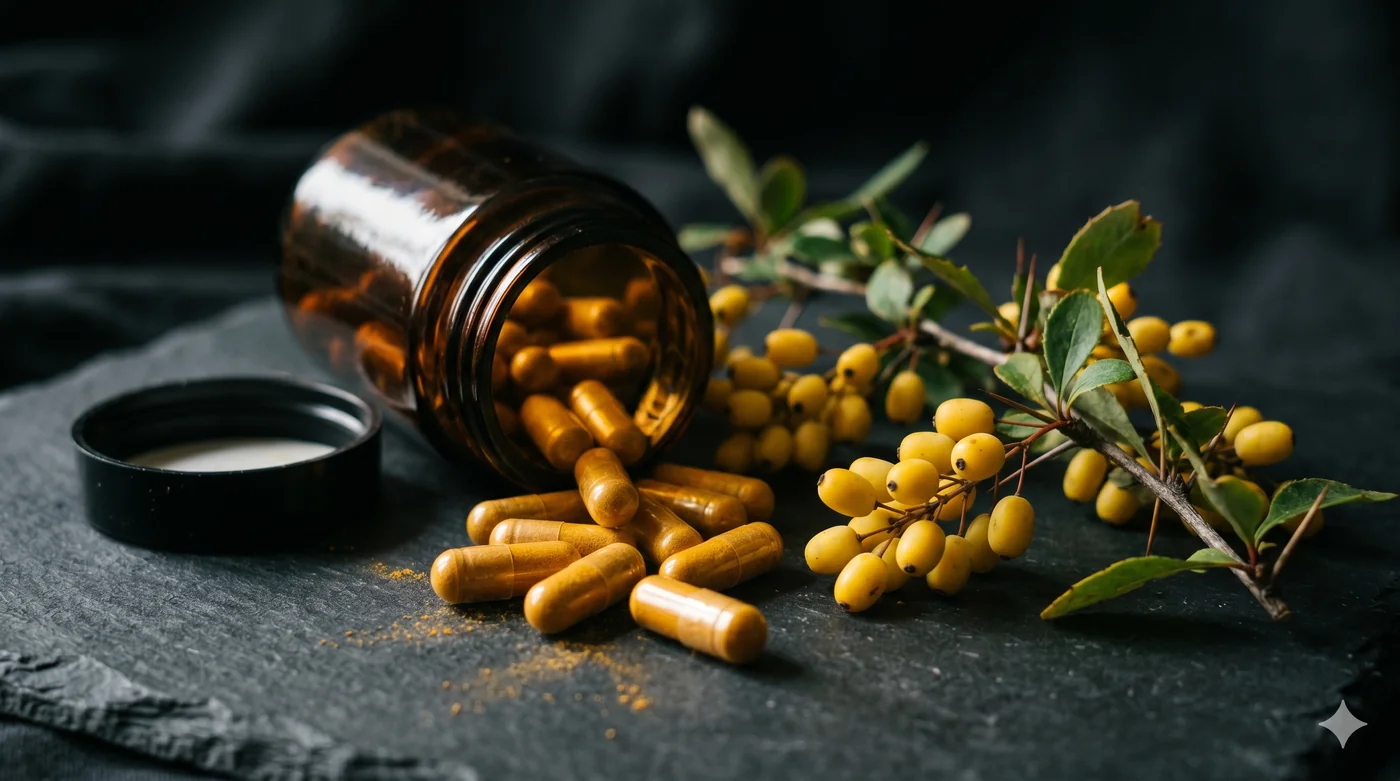
Berberine has been used in traditional Chinese and Ayurvedic medicine for centuries, but it is only in the last two decades that rigorous clinical research has explained precisely why it works. The compound is a plant alkaloid found in barberry, goldenseal, and Oregon grape that activates AMP-activated protein kinase (AMPK) — the same cellular energy sensor targeted by metformin, the world's most prescribed diabetes drug. Multiple meta-analyses now confirm that berberine produces blood sugar reductions, LDL improvements, and fat-loss outcomes that rival pharmaceutical interventions, without requiring a prescription. For athletes and metabolically conscious individuals, understanding berberine's mechanisms separates strategic use from supplement folklore.
What Is Berberine and How Does It Work?
Berberine is an isoquinoline alkaloid — a yellow-pigmented plant compound from the Berberis genus. Its primary mechanism at the cellular level is AMPK activation. AMPK (AMP-activated protein kinase) functions as the body's master metabolic switch: when cellular energy levels drop (high AMP:ATP ratio), AMPK is activated, triggering glucose uptake, fat oxidation, mitochondrial biogenesis, and suppression of energy-expensive processes like lipid synthesis and gluconeogenesis.
Berberine activates AMPK through inhibition of mitochondrial complex I — the same upstream mechanism used by metformin. However, berberine is also a multi-target compound with at least three additional metabolic pathways: it inhibits PCSK9 (a protein that degrades LDL receptors, explaining its LDL-lowering effect), upregulates glucose transporter GLUT4 expression in muscle tissue, and directly modifies the gut microbiome composition in ways that independently improve insulin sensitivity and reduce systemic inflammation.
Berberine vs Metformin: What the Evidence Actually Shows
The landmark head-to-head trial was published in Metabolism in 2008 by Zhang et al. Ninety-seven patients with type 2 diabetes were randomised to berberine (500mg three times daily) or metformin (500mg three times daily) for three months. The results were striking: berberine reduced HbA1c by 2.0% and fasting blood glucose by 3.1 mmol/L. Metformin reduced HbA1c by 2.0% and fasting blood glucose by 3.6 mmol/L. The differences were not statistically significant. Both groups showed improved insulin sensitivity and reduced triglycerides. Berberine additionally reduced LDL by 21% — an effect metformin does not reliably produce.
A 2012 meta-analysis in the Journal of Ethnopharmacology pooled 14 RCTs (n=1,068) and confirmed berberine's blood glucose effects were comparable to oral hypoglycaemic agents, with significant reductions in fasting glucose (weighted mean difference: −1.84 mmol/L), post-prandial glucose (−2.29 mmol/L), and HbA1c (−0.71%). A 2021 meta-analysis specifically comparing berberine to metformin in type 2 diabetes found no significant difference in glycaemic control between the two interventions across 12 trials.
"Berberine does not just control blood sugar through one mechanism — it rewires metabolic signalling at the cellular, hepatic, and microbiome levels simultaneously."
The Fat Loss Data: What Meta-Analyses Show
Berberine's weight-loss effects are modest by pharmaceutical standards but meaningful compared to other natural compounds. A 2012 pilot study in Evidence-Based Complementary and Alternative Medicine had 37 patients with metabolic syndrome take berberine (500mg three times daily) for 12 weeks without dietary changes. Average weight loss was 5 lbs (2.3 kg) with significant reductions in BMI (−1.7 kg/m²), waist circumference (−5.1 cm), and visceral fat estimated by MRI. Importantly, the fat lost was predominantly from the visceral depot — the metabolically dangerous fat around organs.
A 2020 systematic review and meta-analysis pooling 12 randomised trials (n=970) found berberine significantly reduced body weight (weighted mean difference: −2.03 kg), BMI (−0.55 kg/m²), and waist circumference (−2.25 cm) compared to control. Effect sizes were consistent across populations, suggesting the mechanism is not dependent on pre-existing metabolic disease — relevant for otherwise healthy athletes managing body composition. The fat loss effect appears primarily mediated by improved insulin sensitivity and AMPK-driven enhancement of fatty acid oxidation in the liver.
Combining berberine with intermittent fasting is a strategy gaining research interest. Both interventions activate AMPK, and early data suggests synergistic effects on insulin sensitivity when berberine is taken at the end of the eating window to manage post-prandial glucose during the fed state.
LDL Cholesterol and Cardiovascular Effects
Berberine's lipid-lowering mechanism is distinct from statins. It inhibits PCSK9, the protein responsible for degrading LDL receptors on liver cell surfaces. With fewer LDL receptors degraded, the liver clears more LDL particles from circulation. This mechanism is complementary to statin therapy (which increases LDL receptor expression) and independent of blood sugar effects.
A 2015 meta-analysis in the American Journal of Cardiology analysed 11 RCTs (n=874) and found berberine reduced total cholesterol by 0.61 mmol/L, LDL by 0.65 mmol/L, and triglycerides by 0.50 mmol/L, while increasing HDL by 0.05 mmol/L. The LDL reduction of approximately 23% is clinically significant and occurs within 4–8 weeks. For athletes tracking long-term cardiovascular health markers alongside performance metrics, this represents a meaningful secondary benefit.
Berberine and the Gut Microbiome
One of berberine's most clinically important but least-discussed mechanisms is its impact on gut microbial composition. Berberine has limited oral bioavailability (~5%) — most of the compound remains in the gastrointestinal tract where it directly modulates bacterial populations. Research published in Nature Communications in 2018 found berberine selectively suppressed pathogenic bacteria associated with metabolic dysfunction (including several Firmicutes species) while enriching short-chain fatty acid–producing bacteria like Akkermansia muciniphila and Bacteroides fragilis.
This microbiome remodelling produces downstream effects on systemic insulin sensitivity independent of AMPK activation — explaining why berberine's blood sugar effects sometimes outlast its plasma presence. The gut microbiome connection also suggests berberine's efficacy may vary significantly between individuals depending on baseline microbiome composition, which could explain the heterogeneity of response seen across clinical trials.
Muscle Atrophy Protection and Athletic Considerations
A common concern with AMPK activators is the theoretical inhibition of mTOR — the anabolic signalling pathway that drives muscle protein synthesis. Since AMPK and mTOR have a reciprocal inhibitory relationship, compounds that activate AMPK might theoretically impair muscle hypertrophy. The clinical evidence, however, suggests this concern is overstated for berberine at standard doses in trained individuals.
Multiple animal studies have demonstrated that berberine protects against muscle atrophy in catabolic states — likely through its anti-inflammatory effects (reducing IL-6, TNF-α) and its enhancement of glucose uptake in muscle tissue via GLUT4 upregulation. In human data, the fat-loss studies showing 2–4 kg of weight reduction predominantly from fat with preservation of lean mass suggest the mTOR inhibition concern does not materialise at practical doses and timing. The practical protocol is to take berberine before non-training meals (breakfast, lunch on training days) and ensure adequate protein of 1.6–2.2 g/kg bodyweight, consistent with evidence-based supplementation for muscle preservation.
| Metric | Berberine | Metformin | Notes |
|---|---|---|---|
| HbA1c reduction | ~2.0% | ~2.0% | Comparable in head-to-head trials |
| LDL reduction | ~23% | Minimal | Berberine advantage via PCSK9 inhibition |
| Gut microbiome | Beneficial | Modest | Berberine directly remodels microbiota |
| B12 depletion | None reported | Yes (long-term) | Metformin impairs B12 absorption |
| Prescription required | No | Yes | Berberine is available OTC as supplement |
Dosing Protocol and Bioavailability
Berberine's primary pharmacokinetic challenge is poor oral bioavailability — approximately 5% of an oral dose reaches systemic circulation. This is actually partially by design: much of berberine's effect occurs locally in the gut where it modulates the microbiome and interacts with intestinal GLUT4, before being metabolised by hepatic enzymes. The clinical trials demonstrating significant blood sugar and lipid effects used standard berberine HCl salt at 500mg taken two to three times daily before meals.
Who Benefits Most From Berberine?
The highest-value use cases for berberine are in individuals with impaired fasting glucose, elevated LDL cholesterol, excess visceral fat, or insulin resistance markers — even subclinical. These individuals show the most dramatic response in clinical trials. Healthy athletes with no metabolic dysfunction will see smaller absolute benefits, but berberine remains relevant for body recomposition phases, periods of caloric surplus management, and long-term cardiovascular health maintenance.
Athletes in cutting phases or those pursuing aggressive fat loss while maintaining performance can use berberine as a tool to blunt the insulin spikes that drive fat storage without impairing training quality — particularly when combined with higher-carbohydrate post-workout nutrition that bypasses the pre-meal timing protocol. Those tracking continuous glucose data (CGM wearers) will notice berberine's effect as flattened post-prandial glucose curves within the first week of use.
Key Takeaways
- ▸Berberine activates AMPK — the same pathway as metformin — producing comparable HbA1c reductions of ~2.0% in head-to-head trials
- ▸Meta-analyses confirm 2–4 kg fat loss over 12 weeks, predominantly from visceral fat, without mandatory dietary restriction
- ▸LDL reduction of ~23% occurs via PCSK9 inhibition — a mechanism independent of and complementary to blood sugar effects
- ▸Gut microbiome remodelling (Akkermansia enrichment, pathogenic Firmicutes suppression) contributes to sustained insulin sensitivity
- ▸Athletes should time berberine before non-training meals (500mg before breakfast + lunch) to avoid the post-workout mTOR window
- ▸Optimal dose: 1,000–1,500mg/day as berberine HCl, split across meals; cycle 8–12 weeks on, 4 off