Ashwagandha & Adaptogens: The Science Behind Stress, Cortisol & Athletic Performance
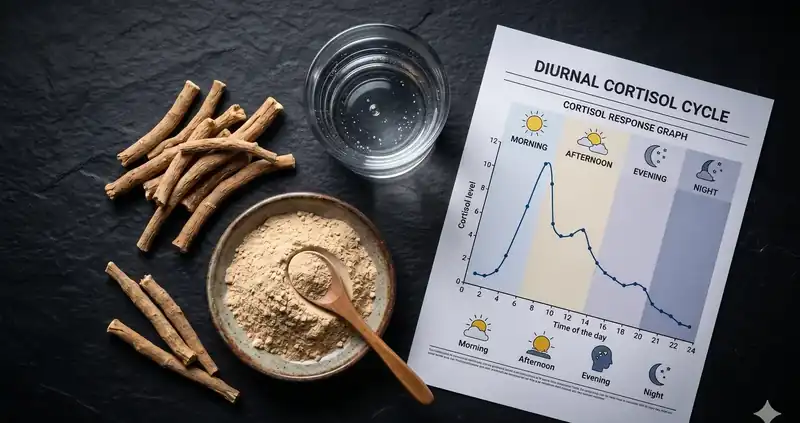
The supplement industry is full of herbs that promise stress relief and leave nothing behind except a lighter wallet. Ashwagandha is different. It is one of the most clinically studied botanical compounds in sports science, with randomised controlled trials demonstrating cortisol reductions of up to 27%, VO2 max improvements of around 7%, and anxiety reductions of 41% versus placebo. Understanding why it works — and how to use it alongside other well-evidenced adaptogens — separates the athletes who get results from those who get expensive urine.
What Is an Adaptogen — And Why Does the Term Matter?
The term "adaptogen" was coined in 1947 by Soviet pharmacologist Nikolai Lazarev to describe a substance that increases non-specific resistance to stress. The working definition has tightened considerably since then. To qualify as an adaptogen in the modern evidence-based literature, a compound must: (1) be non-toxic at therapeutic doses, (2) produce a non-specific stress response that normalises physiological function regardless of whether the stressor is physical, chemical, or biological, and (3) exert a regulatory or normalising effect on the HPA (hypothalamic-pituitary-adrenal) axis — the body's central stress-response system.
This definition excludes most "stress-relief" supplements. Magnesium, for instance, is not an adaptogen — it corrects a deficiency-linked dysfunction rather than modulating the stress response. Adaptogens that meet the scientific criteria include ashwagandha (Withania somnifera), Rhodiola rosea, Eleuthero (Eleutherococcus senticosus), and Schisandra chinensis. Lion's Mane mushroom (Hericium erinaceus) is increasingly grouped with adaptogens for its effects on neurological resilience, though its mechanism differs.
Ashwagandha: How It Works in the Body
Ashwagandha's primary bioactives are withanolides — steroidal lactones that interact with the HPA axis to reduce excessive cortisol secretion. The mechanism is not straightforward suppression; rather, withanolides appear to modulate the sensitivity of glucocorticoid receptors and reduce the hyperactivation of the CRH-ACTH-cortisol cascade that occurs under chronic stress. This is why ashwagandha does not blunt the acute cortisol spike that is normal and necessary during training — it specifically attenuates the chronically elevated baseline that undermines recovery.
A landmark 2012 double-blind RCT published in the Indian Journal of Psychological Medicine gave 300mg KSM-66 ashwagandha twice daily (600mg/day total) to adults with chronic stress. After 60 days, the ashwagandha group showed a 27.9% reduction in serum cortisol compared to 7.9% in the placebo group, alongside significant improvements in all four Perceived Stress Scale subscores. The 2015 Sports Medicine study by Choudhary et al. replicated these findings in resistance-trained men and added the finding that the ashwagandha group gained 1.5× more muscle mass and significantly more strength than placebo over 8 weeks of training — an effect plausibly mediated by the testosterone and IGF-1 increases that accompanied cortisol suppression.
"Ashwagandha does not suppress the cortisol spike you need during training. It attenuates the chronically elevated baseline that prevents recovery."
Ashwagandha and VO2 Max
One of the more surprising findings in the ashwagandha literature is its effect on aerobic capacity. A 2015 randomised trial in the Journal of the International Society of Sports Nutrition randomised 50 healthy adults to 300mg KSM-66 twice daily or placebo for 8 weeks. The ashwagandha group improved VO2 max by 6.96 ml/kg/min — approximately a 7% increase — compared to 4.03 ml/kg/min in the placebo group. Both groups trained consistently throughout; the supplement group simply adapted more efficiently.
The proposed mechanism involves improvements in mitochondrial biogenesis efficiency. Chronically elevated cortisol impairs the signalling pathways (specifically PGC-1α activation) that drive mitochondrial adaptation to endurance training. By lowering baseline cortisol, ashwagandha may allow the same training stimulus to generate a stronger adaptive signal. This would explain why ashwagandha shows larger effects in individuals under high stress loads — the compound is removing a brake, not adding a direct performance stimulus.
Rhodiola Rosea: The Fatigue Fighter
Rhodiola rosea is the best-evidenced adaptogen for acute fatigue resistance. Its primary bioactives — rosavins and salidroside — interact with monoamine transporters to sustain serotonin, dopamine, and norepinephrine signalling during prolonged stress, reducing the subjective experience of fatigue without the rebound crash of stimulants. Unlike ashwagandha, which builds its effects over weeks, Rhodiola produces measurable acute effects within hours of a single dose.
A 2004 randomised crossover trial in Phytomedicine had subjects exercise to exhaustion on a stationary bike. Rhodiola (200mg, standardised to 3% rosavins and 1% salidroside) taken one hour before the test extended time to exhaustion by 17.8 seconds (25 minutes vs 24 minutes 20 seconds for placebo) and reduced perceived exertion scores significantly. A 2015 meta-analysis of 11 studies concluded Rhodiola has a statistically significant positive effect on physical performance, mental performance, and the fatigue–inertia mood subscale.
Practically, Rhodiola is best used acutely — 200–400mg taken 30–60 minutes before a demanding training session, competition, or cognitively taxing workday. Chronic daily use does appear to maintain benefits without significant tolerance development, but the acute pre-event timing is where the evidence is strongest.
Lion's Mane: Neurological Resilience and the Brain-Body Connection
Lion's Mane (Hericium erinaceus) occupies a different niche from ashwagandha and Rhodiola. Its primary mechanism involves stimulating nerve growth factor (NGF) synthesis via its active compounds hericenones and erinacines. NGF is essential for the maintenance, survival, and regeneration of neurons — particularly relevant for athletes dealing with overtraining syndrome, which has a documented neurological component including reduced cognitive function, mood disturbance, and altered central fatigue regulation.
A 2009 double-blind RCT in Phytotherapy Research found that adults taking 3g/day of lion's mane powder for 16 weeks showed significantly improved cognitive function scores compared to placebo, with scores deteriorating back toward baseline four weeks after discontinuation. More relevant to athletes: a 2023 animal study found lion's mane supplementation improved exercise capacity and mitochondrial function markers in mice under high training loads. Human RCTs specifically in athletic populations are still sparse, but the neurological recovery rationale is compelling for anyone with high-volume training schedules.
Effective doses in human studies range from 500mg to 3g per day of a full-spectrum extract. Dual-extracted products (water and alcohol extraction) capture both the water-soluble beta-glucan polysaccharides and the alcohol-soluble hericenones — look for this on the label. Single-extraction products may underdeliver.
The HPA Axis: Why Chronic Stress Kills Athletic Progress
To understand why adaptogens matter for athletes, you need a working model of the HPA axis. When your body perceives a stressor — a hard training session, a work deadline, poor sleep, undereating — the hypothalamus releases corticotropin-releasing hormone (CRH). CRH signals the pituitary to release adrenocorticotropic hormone (ACTH). ACTH signals the adrenal cortex to release cortisol. Cortisol mobilises energy, suppresses inflammation, and prepares the body to handle the stressor. This is adaptive and essential.
The problem arises when the HPA axis is chronically activated — a state that describes most competitive athletes and stressed modern adults. Chronically elevated cortisol suppresses testosterone and IGF-1 through HPG axis interference, impairs protein synthesis directly, increases muscle protein breakdown via glucocorticoid receptors in muscle tissue, disrupts sleep architecture (reducing deep sleep and REM), and blunts immune function. The result is a physiological environment that actively resists the adaptations training is supposed to produce.
| Adaptogen | Primary Mechanism | Onset | Best For | Evidence Level |
|---|---|---|---|---|
| Ashwagandha (KSM-66) | HPA axis modulation, cortisol reduction | 4–8 weeks | Recovery, muscle gain, VO2 max | Strong (multiple RCTs) |
| Rhodiola Rosea | Monoamine regulation, fatigue resistance | 1–2 hours (acute) | Pre-event, cognitive performance | Strong (meta-analyses) |
| Lion's Mane | NGF synthesis, neuroplasticity | 4–16 weeks | Cognitive recovery, neurological resilience | Moderate (emerging RCTs) |
| Eleuthero | Adrenal support, immune modulation | 2–4 weeks | Endurance, immune support | Moderate (historical data) |
| Schisandra | Liver protection, nitric oxide modulation | 2–6 weeks | Endurance, liver health | Moderate (animal + human) |
Dosing and Timing Protocol
Dosing adaptogens correctly matters more than most users realise. The clinical trials that produced the headline numbers used standardised extracts at specific doses — not raw powders of unknown potency. Here is what the evidence supports:
Quality, Contamination, and What to Look For
The herbal supplement market has a quality problem. A 2023 analysis of ashwagandha supplements on the US market found that potency of withanolide content varied from 0.3% to 11.9% across products claiming similar doses. Some were so underpowered that achieving a therapeutic dose would require ten times the labelled serving size. Others had withanolide concentrations so high they carried a potential for liver stress with long-term use.
The practical solution is to use branded extracts from established manufacturers: KSM-66 (Ixoreal Biomed, standardised to ≥5% withanolides by HPLC), Sensoril (Natreon, standardised to ≥10% withanolide glycosides), or Shoden (Arjuna Natural, standardised to 35% withanolide glycosides — the most concentrated available). For athletes subject to anti-doping testing, choose products carrying NSF Certified for Sport or Informed Sport certification — these are batch-tested for contamination with prohibited substances.
Who Benefits Most — and Who Should Be Cautious
The athletes most likely to see measurable performance benefits from ashwagandha are those with chronically elevated stress loads: athletes in high-volume training phases, those managing concurrent life stressors (job, family, travel), athletes recovering from overtraining syndrome, and anyone whose sleep quality has deteriorated under training pressure. The cortisol-lowering effect is proportional to baseline cortisol — if your stress hormones are already well-regulated, the absolute benefit is smaller.
Caution is warranted in specific populations. Individuals with autoimmune conditions (ashwagandha's immune-modulating effects may be contraindicated), those on thyroid medication (ashwagandha stimulates thyroid hormone and can interact with levothyroxine), and pregnant women (withanolides have abortifacient effects in animal models) should consult a physician before use. A small number of case reports link high-dose or long-term ashwagandha use to hepatotoxicity — using standardised products at recommended doses and cycling off every 8–12 weeks mitigates this risk substantially.
The Bottom Line
Adaptogens are not magic. They do not replace sleep, caloric adequacy, or intelligent training programming. What ashwagandha, Rhodiola, and their peers genuinely do is modulate the stress response system in ways that allow the body to absorb training more effectively and recover faster when stress loads are high. The evidence for ashwagandha in particular — 27% cortisol reduction, 7% VO2 max improvement, 14.7% testosterone increase, measurable muscle and strength gains — is robust enough to treat seriously. Use standardised extracts, cycle intelligently, and stack complementary adaptogens based on their distinct mechanisms and timings. The compound effect over 8–12 weeks is meaningful.
Key Takeaways
- ▸Ashwagandha (KSM-66, 300–600mg/day) reduces cortisol up to 27% and improves VO2 max ~7% in 8-week RCTs
- ▸Rhodiola rosea (200–400mg, 30 min pre-event) provides acute fatigue resistance via monoamine modulation
- ▸Lion's Mane supports neurological recovery through NGF stimulation — use dual-extracted products
- ▸Ashwagandha's benefit is proportional to baseline cortisol — high-stress athletes benefit most
- ▸Use standardised branded extracts (KSM-66, Sensoril); cycle 8–12 weeks on, 4 weeks off
- ▸Athletes subject to drug testing should use NSF Certified for Sport or Informed Sport products