Caffeine & Athletic Performance: The Science of Dosing, Timing & Cycling
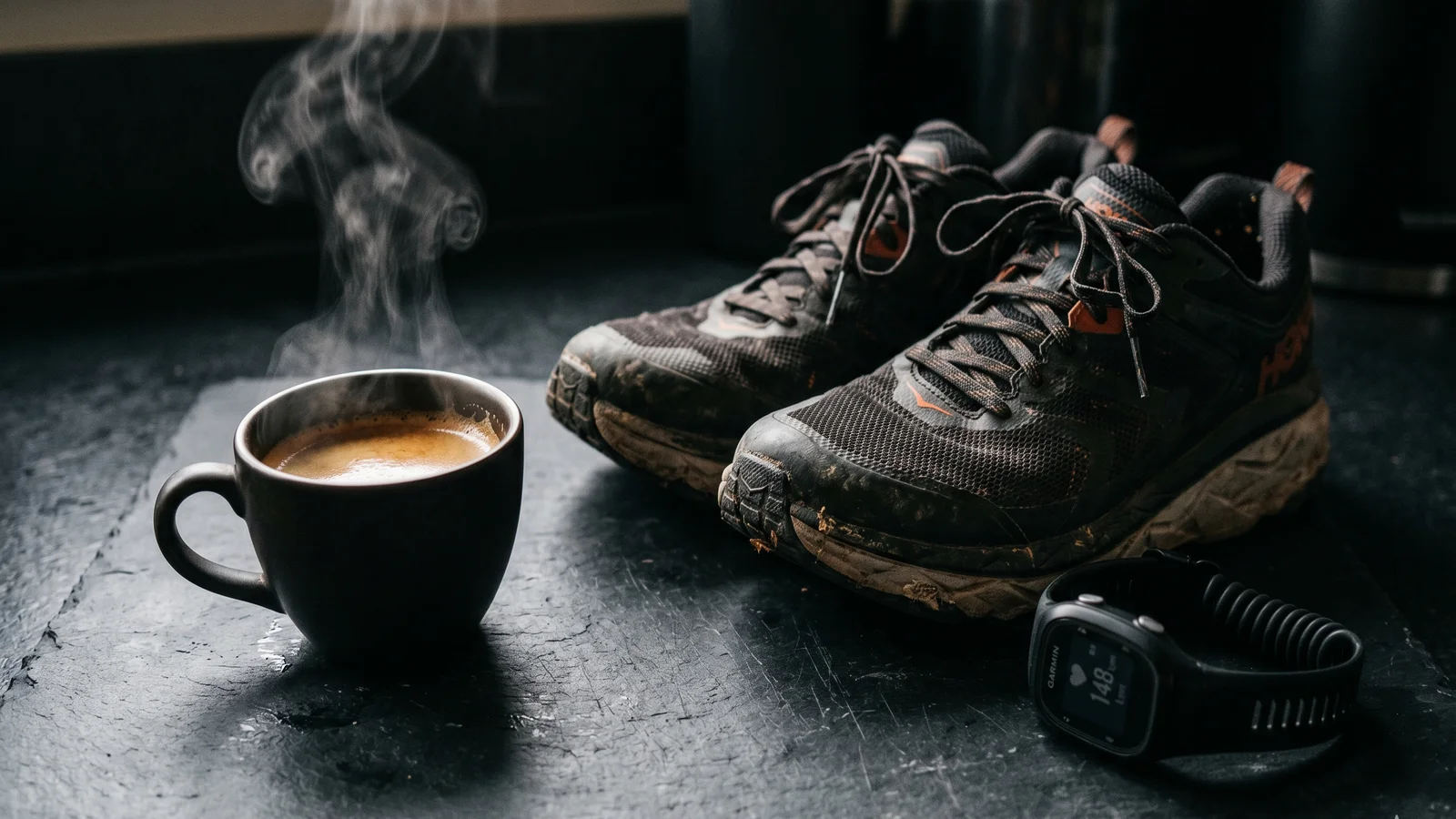
Caffeine is the most thoroughly studied ergogenic aid in the history of sports science. More than 300 controlled trials have examined its effects on physical performance, and the consensus is unusually clear: at the right dose, at the right time, caffeine reliably improves endurance output by 2–4%, reduces perceived exertion, enhances concentration, and — in some protocols — meaningfully increases peak power. It is also freely available, legal in competition, and costs almost nothing. The question is not whether caffeine works. The question is whether you are using it correctly.
How Caffeine Works in the Body
Caffeine is a xanthine alkaloid that acts primarily as an adenosine receptor antagonist. Adenosine is a neuromodulator that accumulates throughout the day and progressively makes you feel fatigued — it is the molecule responsible for the sensation of tiredness. Caffeine molecules are structurally similar to adenosine and compete for the same receptor sites. By blocking adenosine's access to its receptors, caffeine prevents the transmission of fatigue signals without removing the underlying adenosine accumulation.
Downstream of adenosine blockade, caffeine increases circulating levels of epinephrine (adrenaline), dopamine, and norepinephrine. This explains the heightened arousal, improved focus, elevated heart rate, and enhanced fat mobilisation that accompany caffeine ingestion. Caffeine also directly increases calcium release in muscle cells, which may contribute to improvements in muscular force production independent of its central nervous system effects.
After oral ingestion, caffeine is rapidly absorbed through the gastrointestinal tract. Plasma concentrations peak at approximately 45–75 minutes post-ingestion, making 60 minutes the standard pre-exercise recommendation. The half-life in most adults is 4–6 hours, meaning half the caffeine from a morning dose is still circulating at midday. Liver enzymes (primarily CYP1A2) govern metabolic clearance, and genetic variation in this enzyme explains a 40-fold difference in caffeine metabolism between individuals.
What the Evidence Says About Performance
A 2020 meta-analysis in the British Journal of Sports Medicine synthesised 300 trials and found caffeine improved endurance performance by an average of 2–4%, time-to-exhaustion by 16%, and muscular strength by approximately 2%. Effects are most consistent in aerobic endurance events — running, cycling, rowing, swimming — and less consistent but still present in maximal strength and power output.
Perceived exertion (RPE) consistently drops with caffeine at a given work rate, meaning the same physical output feels easier. This is arguably the most practically important effect — it allows you to push harder before reaching volitional exhaustion. Research in team sport contexts shows improvements in sprint frequency, decision speed, and skill execution late in matches when caffeine is used.
Strength and power evidence is more heterogeneous. Some studies show 2–3% improvements in one-rep max and peak power output; others show no effect. The most reliable signal is in muscular endurance — the number of repetitions performed at a given percentage of 1RM improves more consistently than absolute peak strength.
"Caffeine is the one supplement where the evidence for performance enhancement is strong enough that we can confidently say it works across a wide range of exercise modalities."
— British Journal of Sports Medicine, Meta-Analysis 2020
Optimal Dosing: The 3–6 mg/kg Protocol
The research-supported dose range for performance enhancement is 3–6 mg per kilogram of bodyweight. For an 80 kg athlete this is 240–480 mg — roughly the caffeine content in 2–4 espressos or a medium pre-workout supplement. At doses below 3 mg/kg, effects are inconsistent. Above 6 mg/kg, side effects (anxiety, GI distress, impaired fine motor control) begin to outweigh performance benefits for most people.
If you are caffeine-naive or sensitive, start at 1–2 mg/kg and assess your individual response before increasing. Genetic variation in CYP1A2 activity means some people clear caffeine so slowly that even a moderate dose causes significant sleep disruption when taken mid-morning. Others clear it quickly and can tolerate higher doses later in the day without consequence.
Dose Reference by Bodyweight
| Bodyweight | Low dose (3 mg/kg) | High dose (6 mg/kg) |
|---|---|---|
| 60 kg | 180 mg | 360 mg |
| 70 kg | 210 mg | 420 mg |
| 80 kg | 240 mg | 480 mg |
| 90 kg | 270 mg | 540 mg |
| 100 kg | 300 mg | 600 mg |
Timing: When to Take Caffeine for Maximum Effect
The standard recommendation is 45–60 minutes pre-exercise, timed to align peak plasma concentration with the start of the event. For most sports this works well. However, for very long events (marathons, long-distance triathlons, ultra-endurance), some athletes use a strategy of low initial dosing with a mid-event top-up — using caffeine gels at the 90-minute mark — to maintain stimulation during the back half of the race.
For strength training, timing relative to a session start matters less than for endurance events because individual set duration is short and the acute arousal effect of caffeine persists for 3–4 hours. Taking caffeine 30–60 minutes before lifting is sufficient. Avoid caffeine within 6 hours of your intended bedtime regardless of training time, as sleep quality is the most common casualty of poor caffeine timing and sleep is irreplaceable for muscle protein synthesis and recovery.
Pairing your TDEE calculation with an awareness of your training schedule helps here — if your calorie deficit is already creating fatigue, caffeine can mask it without addressing the underlying issue. Ensure your energy intake supports your training load before relying on stimulants.
Caffeine Tolerance and How to Reset It
Regular caffeine use upregulates adenosine receptor density — the brain responds to chronic blockade by growing more receptors, progressively diminishing the ergogenic effect at a given dose. This is caffeine tolerance. It develops within 1–2 weeks of consistent daily use and is the main reason habitual coffee drinkers often feel they "need" caffeine to feel normal rather than experiencing a performance uplift above their baseline.
The solution is deliberate cycling. The most evidence-supported protocol is to reserve caffeine for competition days and key training sessions only, avoiding habitual daily use. If daily use is already established, a 10–14 day washout period (reducing gradually over the first 3–4 days to avoid withdrawal headaches) is sufficient to restore sensitivity. After the washout, a pre-competition dose at 3 mg/kg produces the full ergogenic response.
Caffeine Cycling Protocol for Athletes
- check_circleWeeks 1–10: Reserve caffeine for race days, A-sessions, and heavy training days. Avoid habitual daily use.
- check_circleDays 11–14: Washout period — reduce dose gradually (cut by 50% for 3 days, then eliminate). Expect mild fatigue and possible headaches days 2–4.
- check_circleWeek 12 onwards: Sensitivity is restored. Resume strategic use for competition and key sessions.
- check_circleDaily coffee drinkers: If you must have coffee daily, consider switching to decaf during low-priority training periods to maintain social routine without building tolerance.
Caffeine Sources and What to Avoid
Caffeine anhydrous (the form in most supplements and gels) has highly predictable pharmacokinetics. Coffee contains additional compounds — chlorogenic acids, diterpenes — that affect absorption rate and add biological complexity. Research comparing anhydrous caffeine to coffee head-to-head generally shows comparable performance effects, but the dose variability in coffee (anywhere from 60–200 mg per shot depending on roast and extraction) makes precise dosing harder.
Energy drinks typically combine caffeine with B vitamins, taurine, and sugars. The performance data on these formulations often cannot disentangle the caffeine effect from carbohydrate or taurine effects, making them less useful for isolating ergogenic dose. High-sugar energy drinks also add unnecessary calories that work against body composition goals — use caffeine anhydrous tablets or gels for precision dosing.
Pair caffeine use with accurate macro tracking using our Macro Calculator — caffeine suppresses appetite and can mask low energy intake, inadvertently creating deficits larger than intended on heavy training days.
Who Responds Best — and Who Should Be Cautious
Genetic variation in the CYP1A2 gene divides people into fast metabolisers and slow metabolisers. Fast metabolisers (roughly 50% of the population) clear caffeine quickly, experience robust performance enhancement, and show little cardiovascular risk at moderate doses. Slow metabolisers process caffeine more slowly — blood pressure elevation persists longer, and cardiovascular risk (in retrospective research) appears elevated at higher doses.
People with anxiety disorders, cardiac arrhythmia, or high blood pressure should use caffeine conservatively and with medical guidance. Pregnant athletes should limit caffeine to under 200 mg per day in line with WHO guidance. For healthy athletes with no contraindications, the evidence for safe use at 3–6 mg/kg is robust.
Frequently Asked Questions
Does caffeine dehydrate you?
At moderate doses (up to 6 mg/kg), caffeine does not cause meaningful dehydration in habitual users. The mild diuretic effect is offset by the fluid content of caffeinated beverages. Studies confirm that coffee and caffeinated sports drinks count toward daily fluid intake. Very high doses or use in extreme heat may warrant additional hydration monitoring — use our Water Intake Calculator to set your baseline.
Is caffeine legal in sport?
Yes. Caffeine was removed from the WADA prohibited list in 2004 and is currently an unrestricted substance. It is monitored but not banned. NCAA urinary limits of 15 µg/mL exist but are effectively unreachable at evidence-supported performance doses — they would require consuming around 700 mg within 2–3 hours of testing, which far exceeds optimal dosing.
Can I use caffeine on rest days?
You can, but if your goal is to maintain sensitivity for training and competition, minimising rest-day use is advantageous. If you experience withdrawal headaches without daily caffeine, this signals established dependence — a 10–14 day taper and washout will restore baseline sensitivity. After the washout, reserve caffeine for sessions where you want the ergogenic effect.
How much caffeine is in common sources?
Espresso: 60–80 mg per shot. Filter/drip coffee: 80–150 mg per 250 ml cup. Energy drink (250 ml): 80 mg typically. Pre-workout supplement: 150–300 mg per serving (check labels — highly variable). Caffeine anhydrous tablet: 100–200 mg per tablet. Tea: 20–50 mg per cup. Dark chocolate: 5–20 mg per 30g square.
Does caffeine help with strength training or just endurance?
Both, but the effect is more consistent in endurance. For strength training, caffeine most reliably increases muscular endurance (more reps at a given percentage of 1RM) and reduces perceived exertion during training. Peak strength improvements (1RM) are present in some studies but not all. The mental focus enhancement is particularly valuable for technical lifts requiring concentration — caffeine can meaningfully improve session quality for strength athletes.